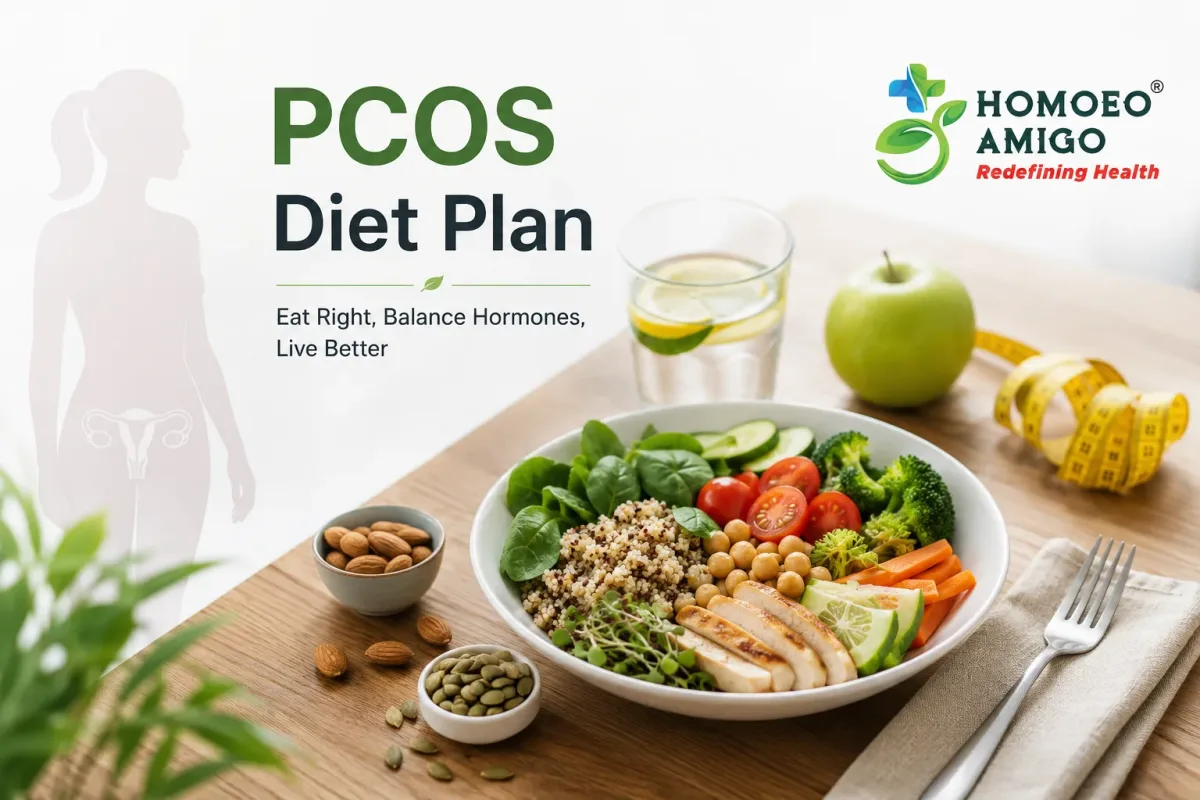
PCOS Diet Plan: Best Foods to Manage PCOS Naturally
No rice. No sugar. No Dairy. No carbs. Try intermittent fasting. Go keto. Take supplements.
If you have PCOS, you have probably heard at least one of these recommendations. With so much conflicting advice online, figuring out what to actually eat for PCOS can feel more confusing than helpful. The truth is, there is no magical food or one-size-fits-all PCOS diet plan that can cure PCOS overnight. What matters more is building a balanced and sustainable way of eating that supports your overall health, energy levels, and metabolic health.
A practical PCOS diet plan can include foods you already eat at home, like dal, roti, rice, vegetables, etc. You don’t necessarily need to eliminate carbohydrates or survive on salads just because you have PCOS. In this article, let’s break down what to eat for PCOS, foods to limit, and a simple 7-day PCOS diet plan to avoid turning your meals into a complicated rulebook.
What is PCOS?
PCOS, or Polycystic Ovary Syndrome, is a common hormonal condition that can affect menstrual cycles, ovulation, androgen levels, skin, hair, and fertility. Some women with PCOS may also experience:
Excess facial or body hair
Hair thinning
Weight changes
Difficulty losing weight
Insulin resistance
Difficulty becoming pregnant
Not every woman with PCOS will have all of these symptoms. It is also important to understand that PCOS is not simply a weight-related condition. Women of different body sizes can have PCOS. This is why a diet plan for PCOS should be based on the person’s overall health rather than focusing only on the weighing scale.
Why Does Diet Matter in PCOS?
Food cannot cure PCOS, but your everyday eating habits can play an important role in overall health. A balanced PCOS diet plan may help support:
Healthy blood glucose levels
Better overall nutrition
Adequate fiber intake
Healthy weight management when weight loss is appropriate
Better satiety and reduced unnecessary snacking
Cardiometabolic health
Sustainable lifestyle habits
Insulin resistance is common in PCOS, although it does not occur in every woman with the condition. This is one reason nutrition and physical activity are often discussed as part of PCOS management. The important point is that you don’t need to follow an extreme diet to eat well with PCOS.
What Should a PCOS Diet Plan Include?
Think of your meals as a combination rather than focusing on individual “good” or “bad” foods. A practical PCOS diet plan can include:
Protein: It helps make your meals more filling and can be included in most main meals. Good options include eggs, paneer, tofu, curd, dal, chickpeas, rajma, fish, and chicken.
Fiber-rich foods: Fiber is an important part of a healthy eating pattern. You can include vegetables, whole fruits, oats, whole wheat roti, brown rice, lentils, nuts and seeds, etc.
Healthy fats: Healthy fats should not be completely removed from your diet. Include appropriate portions of almonds, walnuts, chia seeds, flaxseeds, pumpkin seeds, olive oil, fatty fish, etc. Portion size still matters because healthy fats are calorie-dense.
Fruits and vegetables: You do not need to stop eating fruit because you have PCOS. Whole fruits such as apples, guava, oranges, papaya, pears, and berries can be part of a balanced diet.
Food to Avoid in PCOS
There is no one universal list that every woman with PCOS must follow. Instead, try to limit frequent consumption of:
Sugary soft drinks
Sweetened packaged beverages
Excess sweets
Cakes and pastries
Biscuits and highly processed snacks
Frequent deep-fried foods
Ultra-processed foods
7-Day PCOS Diet Plan
The following 7-day PCOS diet plan is a general example for healthy eating. It is not a personalized medical diet.
Day 1:
Breakfast: Vegetable oats with boiled eggs or curd.
Mid-morning: Guava
Lunch: 2 whole wheat rotis, dal, mixed vegetables, and salad.
Evening snack: Roasted chana and unsweetened tea.
Dinner: Paneer or tofu with vegetables and a small serving of brown rice.
Day 2:
Breakfast: Vegetable poha with peanuts and curd.
Mid-morning: Apple or orange
Lunch: Brown rice, rajma, vegetables, and salad.
Evening snack: A small handful of nuts.
Dinner: Vegetable soup with paneer/ tofu or chicken and one roti.
Day 3:
Breakfast: Besan chilla with vegetables and curd.
Mid-morning: Papaya
Lunch: 2 rotis, chana dal, vegetables, and salad.
Evening snack: Roasted makhana
Dinner: Vegetable khichdi with curd and salad.
Day 4:
Breakfast: Vegetable omelette with whole-grain toast
Mid-morning: Pear
Lunch: Millet, roti, dal, vegetables, and curd
Evening snack: Unsweetened yogurt with chia seeds.
Dinner: Grilled paneer, tofu, or fish with sautéed vegetables.
Day 5:
Breakfast: Overnight oats with unsweetened yogurt, chia seeds, and fruit.
Mid-morning: Guava
Lunch: Brown rice, chickpeas, vegetables, and salad.
Evening snack: Nuts and unsweetened tea.
Dinner: 2 rotis with dal and mixed vegetables.
Day 6:
Breakfast: Moong dal chilla with paneer filling.
Mid-morning: Seasonal fruit.
Lunch: 2 rotis with chicken, paneer, or tofu, vegetables, and salad.
Evening snack: Roasted makhana or chana.
Dinner: Dal soup, vegetables, and a small serving of whole-grain carbohydrate.
Day 7:
Breakfast: Vegetable upma with curd.
Mid-morning: Apple or orange
Lunch: Rice, dal, vegetables, salad and curd.
Evening snack: Roasted chana or a small handful of nuts.
Dinner: Paneer, tofu or chicken with vegetables and one roti.
A PCOS diet plan does not need to be complicated, expensive or restrictive. You do not have to give up rice, roti or fruits completely. You also don’t need to survive on salads or depend on expensive “PCOS-friendly” products. Instead, focus on the basics: eating enough protein, choosing fiber-rich foods, including fruits and vegetables, and limiting excessive added sugar and highly processed foods.
Most importantly, remember that PCOS is different for every woman. Your symptoms, nutritional needs, weight, metabolic health, medications, and personal goals all matter. If you have PCOS, speak with a qualified healthcare professional before making major dietary changes, especially if you have diabetes, insulin resistance, fertility concerns, or take regular medication.
At Homoeo Amigo, we encourage an individualized approach to health. Discuss your symptoms and complete health history with a qualified healthcare professional to understand the most appropriate options for your situation.
Comments (0)
Loading comments...