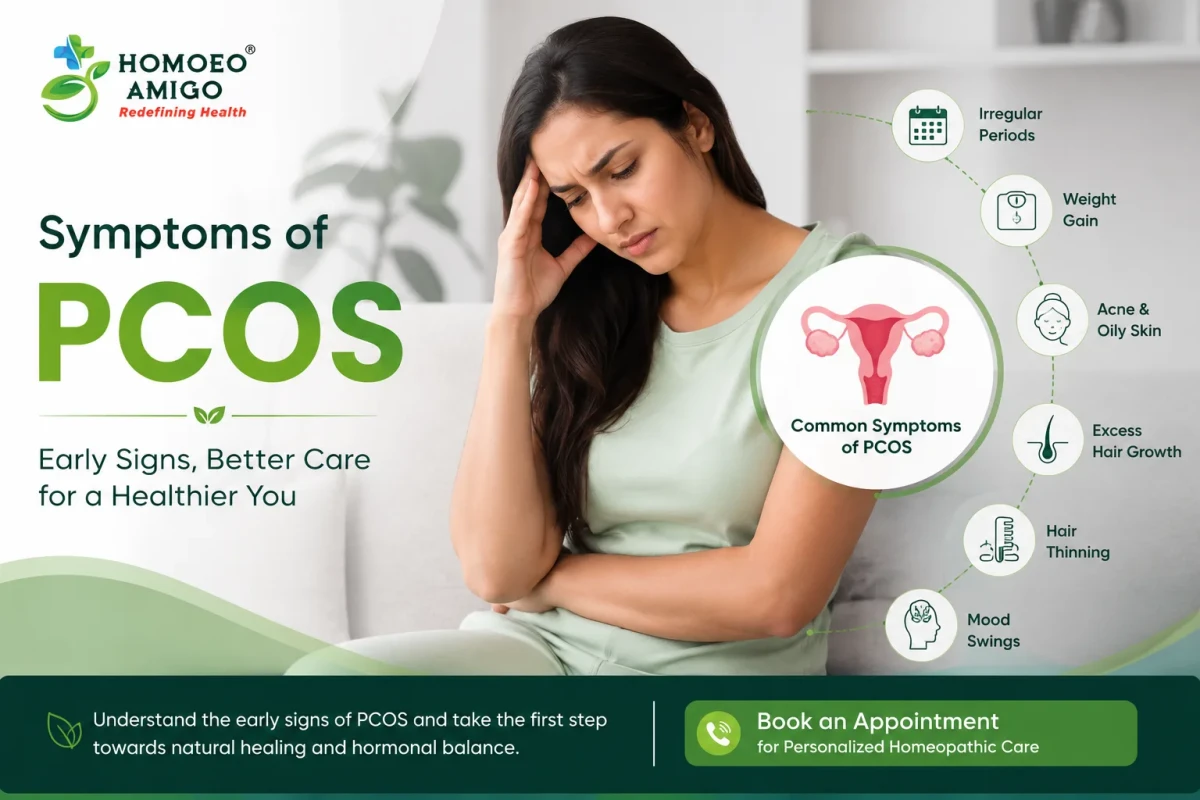
Symptoms of PCOS: Early Signs, Causes and Treatment
Polycystic ovary syndrome or PCOS is one of the most common hormonal disorders affecting women of reproductive age. Despite being so common, many women live with PCOS symptoms for years before reciebving the right diagnosis. Irregular periods, acne, unexplained weight gain, and excessive hair growth are often ignored or mistaken for normal hormonal changes.
The reality is that early identification of the symptoms of PCOS can help prevent long-term complications such as infertility, diabetes, high cholesterol, and heart disease. If you have been experiencing these changes in your menstrual cycle, struggling with stubborn acne, or noticing unusual body hair growth, your body may be trying to tell you something. In this guide, let’s explore symptoms of PCOS, why they occur, when to seek medical help, and how lifestyle changes and homeopathy may support overall hormonal health.
What is PCOS?
Polycystic Ovary Syndrome (PCOS) is a hormonal condition where the ovaries produce higher-than-normal levels of androgens, that is the male hormones. This hormonal imbalance affects ovulation, metabolism, and overall reproductive health. Women with PCOS may experience irregular or missed periods, develop multiple small follicles in the ovaries, have difficulty ovulating, face fertility issues, experience insulin resistance, and may develop a long-term metabolic disorder if left untreated. Not every woman experiences the same symptoms. Some have mild symptoms, while others may experience multiple health concerns simultaneously.
Common Symptoms of PCOS:
Polycystic ovary syndrome (PCOS) can show up in different ways, and the signs are often easy to overlook at first. From changes in your menstrual cycle to skin and hair concerns, these symptoms are your body’s way of signaling that something may be out of balance. Recognizing them early can help you seek timely support and take positive steps toward managing your health.
Here are some of the most common symptoms of PCOS every woman should know:
Irregular Menstrual Periods:
One of the earliest and most noticeable signs of PCOS is an irregular menstrual cycle. You may notice periods arriving months apart, missing periods completely, heavy bleeding after long gaps, very light periods, and unpredictable menstrual cycles. Irregular periods happen because ovaries fail to release an egg regularly, making ovulation inconsistent or absent.
Difficulty Getting Pregnant:
Many women discover they have PCOS only after trying to conceive. Symptoms include difficulty ovulating, irregular egg release, delayed conception, and recurrent failed pregnancy attempts. Since ovulation becomes irregular, fertilization becomes more difficult. Fortunately, many women with PCOS successfully conceive after receiving proper treatment and making lifestyle changes.
Excessive Hair Growth or Hirsutism:
Another common symptom of PCOS is excessive hair growth caused by elevated androgen levels. Hair may appear on the chin, upper lip, chest, back, lower abdomen, fingers, and toes. The hair is often darker, thicker, and grows faster than usual. This symptom affects nearly 70% of women with PCOS.
Acne That Does Not Improve:
Persistent acne is another classic sign of hormonal imbalance. PCOS-related acne usually appears on the chin, jawline, neck, upper back, and chest. Unlike teenage acne, hormonal acne often returns every month. It does not respond well to regular skincare, becomes painful and cystic, and leaves pigmentation or scars.
Weight Gain:
Unexpected weight gain is one of the most frustrating PCOS symptoms in women. Common signs include belly fat accumulation, difficulty losing weight, increased appetite, slow metabolism, and weight gain despite healthy eating. Many women with PCOS also develop insulin resistance, making weight management even more challenging.
Hair Thinning or Hair Loss:
While excess hair grows on the face and body, hair on the scalp often becomes thinner. You may notice hair fall while combing, wider hair partition, reduced hair volume, thinning around the crown, and female pattern baldness. This happens due to increased androgen activity affecting hair follicles.
Dark Skin Patches:
Dark, velvety patches on the skin can indicate insulin resistance associated with PCOS. Common areas include the neck, underarms, groin, elbows, and knees. This condition is known as Acanthosis Nigricans. It often signals that the body isn’t using insulin effectively.
Skin Tags:
Small, soft skin growths are surprisingly common among women with PCOS. Skin tags often appear around the neck, underarms, groin, and eyelids. Although harmless, they may indicate underlying insulin resistance.
Oily Skin:
Many women with PCOS experience excess oil production. Symptoms include a greasy face, enlarged pores, frequent pimples, shiny skin, and makeup wearing off quickly. The increase in oil production is triggered by elevated androgen hormones.
Pelvic Pain:
Some women experience mild pelvic discomfort, pain during ovulation, lower abdomen heaviness, and occasional cramps between periods. While pelvic pain is not experienced by everyone with PCOS, it can occur due to enlarged ovaries or hormonal fluctuations.
Mood Swings:
Hormonal imbalance affects more than physical health. Many women report mood swings, irritability, anxiety, depression, low confidence, and emotional sensitivity. Living with persistent acne, weight gain, and fertility concerns can also impact emotional well-being.
Difficulty in Losing Weight:
Unlike normal weight gain, women with PCOS often struggle to lose weight even after regular exercise, healthy eating, calorie restriction, and walking daily. Insulin resistance can make weight loss slower than expected.
Can You Have PCOS Without All The Symptoms?
The answer is yes. Many women have only a few symptoms of PCOS, while others experience several at the same time. For example, some only have irregular periods, while others mainly struggle with acne and facial hair. This variation is one reason PCOS can go undiagnosed for years.
PCOS is more than just an irregular menstrual cycle. It is a complex hormonal condition that can affect your reproductive health, metabolism, skin, hair, and emotional well-being. Recognizing the symptoms of PCOS early, such as irregular periods, acne, weight gain, excessive hair growth, or difficulty in conceiving, is the first step toward managing the condition effectively. While PCOS cannot always be cured, timely diagnosis, a healthy lifestyle, and the right treatment plan can help control symptoms, improve hormonal balance, and reduce the risk of long-term complications.
At Homoeo Amigo, we believe in a personalized and holistic approach to women’s health. Our experienced homeopathic doctors carefully evaluate your symptoms, medical history, and overall health to create an individualized treatment plan that is aimed at supporting hormonal balance and overall well-being. Book a consultation today with Homoeo Amigo and let our experts guide you toward a healthier and more balanced life with compassionate, personalized care.
Comments (0)
Loading comments...