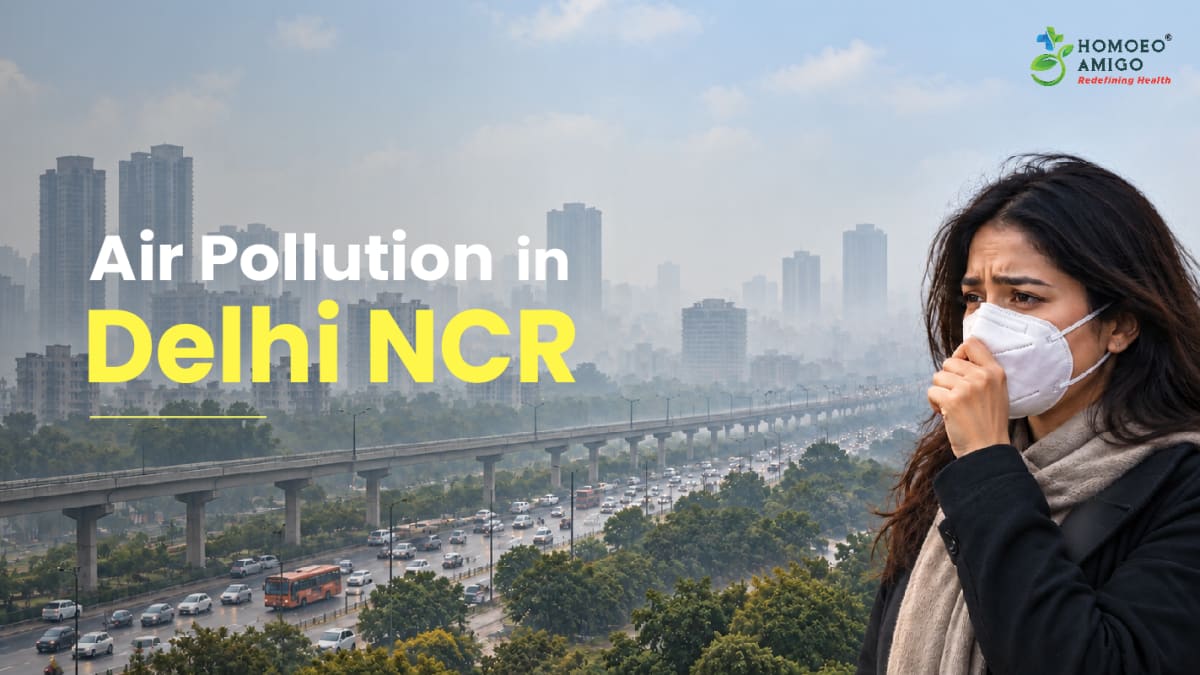
Air Pollution in Delhi NCR: Causes, Effects & Safety Tips
The sky may look grey, but the real concern is what you cannot see. Delhi air quality continues to be a concern during the winter months. Are you doing enough to protect your lungs even when you spend most of your day indoors?
Every winter, the same worries return across Delhi, Noida, Greater Noida and Ghaziabad. Parents wonder whether it is safe for their children to play outside. Older adults reconsider their morning walks, while people with asthma or recurring respiratory problems may notice more coughing, wheezing or difficulty breathing.
Air pollution in Delhi NCR is not just a seasonal inconvenience, but prolonged exposure to polluted air, which can irritate the respiratory system, worsen your existing lung conditions and increase the risk of serious health problems.
From checking Delhi pollution news today to understanding how indoor air quality affects your family, small but informed decisions can help reduce exposure. Knowing what causes Delhi NCR pollution, how it affects your lungs and when to seek medical advice is an important first step towards protecting your health.
What Does Delhi NCR's AQI Mean for Your Health?
If you have ever checked the air quality before leaving home, you have probably come across the term AQI. The Air Quality Index helps explain how polluted the air is and what it may mean for your health. India's AQI scale usually ranges from 0 to 500. The higher the number, the greater the concern about the potential health effects of air pollution.
AQI CATEGORY | RANGE | WHAT IT MEANS FOR YOUR HEALTH |
Good | 0-50 | Minimal health impact expected. |
Satisfactory | 51-100 | Minor discomfort may occur in sensitive individuals. |
Moderate | 101-200 | People with existing respiratory or heart conditions may experience discomfort. |
Poor | 201-300 | Prolonged exposure may cause breathing discomfort. |
Very poor | 301-400 | Prolonged exposure can increase the risk of respiratory illness. |
Severe | 401-500 | Health effects may occur even in healthy people, with greater risks for vulnerable individuals. |
Source: Central Pollution Control Board (CPCB), India's National Air Quality Index.
When people search for air pollution in Delhi today or the latest Delhi pollution news, they are often trying to answer a simple question: Is it safe to go outside?
Delhi air quality can change throughout the day, so checking the latest AQI from official sources such as the CPCB or the SAMEER air quality app is more useful than relying on yesterday's readings.
Several factors contribute to Delhi NCR pollution, including vehicle emissions, construction dust, industrial activities, waste burning and weather conditions that prevent pollutants from dispersing easily. One major concern is PM2.5, a type of fine particulate matter that can travel deep into the lungs. These particles are so small that you cannot judge their concentration simply by looking at the sky. That is why checking the AQI before outdoor activities is especially important for children, older adults and people with asthma or other respiratory conditions.
How Does Air Pollution in Delhi Affect Your Lungs?
Your lungs work hard every day to bring oxygen into your body. However, when you breathe polluted air, your respiratory system can be exposed to harmful particles and gases that irritate the airways. During periods of severe Delhi pollution, some people notice symptoms almost immediately. Others may experience recurring discomfort or worsening respiratory problems after prolonged exposure. Some common air pollution symptoms include:
Persistent or worsening cough.
Irritation in the nose and throat.
Wheezing or a whistling sound while breathing.
Tightness or discomfort in the chest.
Breathlessness during everyday activities.
More frequent or severe asthma symptoms.
Air pollution can aggravate asthma and other existing respiratory conditions. Long-term exposure is also associated with an increased risk of chronic lung disease and cardiovascular problems. However, not every cough or breathing problem is caused by Delhi NCR pollution. Respiratory infections, allergies and other medical conditions can produce similar symptoms.
If you develop a persistent cough, recurring wheezing or unusual breathlessness, do not simply assume it is because of the weather. Speak with a healthcare professional to understand the possible cause and receive appropriate care.
Children, Older Adults and People with Asthma Need Extra Care
Although air pollution can affect everyone, some people are more vulnerable to its effects. During periods of poor Delhi air quality, families may need to make a few changes to their usual routines.
School-going children: Children's lungs are still developing, and outdoor play, sports and school commutes can increase their exposure to polluted air. When Delhi pollution levels are high, follow local health advisories and consider moving outdoor activities indoors. Pay attention if your child develops a recurring cough, wheezing or difficulty breathing after spending time outside. Persistent symptoms deserve medical attention rather than being dismissed as a normal winter problem.
Older adults: Older adults, particularly those living with heart or lung conditions, may be more sensitive to changes in air quality. If Delhi NCR pollution reaches unhealthy levels, consider indoor exercise instead of a long morning walk outdoors. If everyday activities suddenly leave you unusually breathless or you experience worsening respiratory symptoms, contact your doctor.
People living with asthma or COPD: For people with asthma or chronic obstructive pulmonary disease (COPD), polluted air can trigger symptoms and make breathing more difficult. Follow your prescribed treatment plan, keep your medication accessible and consult your doctor if your symptoms become harder to manage. Do not stop prescribed inhalers or replace established treatment with alternative remedies.
Remember, protecting your health during the Delhi pollution season is not just about avoiding outdoor exposure. Pollutants can also enter homes, schools and workplaces.
Masks Can Help Outside. What About Indoor Air Pollution?
Wearing the right mask outdoors can help reduce exposure to fine particles, but it does not completely protect you from air pollution. The air inside your home or office matters, too. Polluted outdoor air can enter through windows, doors and ventilation systems. Indoor sources, such as tobacco smoke, cooking fumes and burning materials, can add to the problem. Here are a few practical ways to reduce your exposure to Delhi NCR pollution:
Check Delhi air quality daily. Look at the latest AQI before planning walks, outdoor exercise or activities for children.
Manage ventilation carefully. During severe outdoor pollution, keep windows closed where practical. Ventilate when outdoor air quality improves, while maintaining safe ventilation for cooking and other indoor activities.
Consider an air purifier. A properly sized purifier with effective particle filtration, such as a suitable HEPA filter, may help reduce airborne particles in indoor spaces. Clean or replace filters according to the manufacturer's instructions.
Reduce smoke. Avoid smoking indoors and minimise unnecessary burning of incense or other materials, especially when outdoor pollution is already high.
Choose an appropriate mask. A well-fitting N95 respirator can reduce exposure to fine particles. Cloth masks and scarves do not offer equivalent protection against PM2.5.
Limit outdoor activity when advised. If air pollution in Delhi today is particularly high, consider exercising indoors rather than exposing yourself to polluted air during intense physical activity.
No single precaution can eliminate every risk. The aim is to reduce your overall exposure and make informed decisions based on current air quality and official advisories.
Homoeopathy and Respiratory Health: What Should You Know?
When coughs, allergies or breathing complaints seem to return every winter, it is natural to look for ways to feel better. Some families also explore homoeopathy as part of their healthcare choices. At Homoeo Amigo, patients can discuss their recurring symptoms, health concerns and medical history during a homoeopathic consultation. However, it is important to understand the limits of homoeopathy when it comes to air pollution in Delhi NCR. Reliable scientific evidence has not established homoeopathy as an effective treatment for preventing pollution-related lung damage, removing pollutants from the lungs or reversing the harmful effects of smog.
Homoeo Amigo: A Homoeopathy Clinic Network Across Delhi NCR
Finding a healthcare provider close to home can make it easier to discuss recurring health concerns and understand the services available to you. Homoeo Amigo has a network of eight clinics across Delhi, Noida, Greater Noida West and Ghaziabad, in addition to its presence through three homoeopathy clinics in Kolkata. Residents across Delhi NCR can explore the following locations:
Delhi
Noida and Greater Noida West
Ghaziabad
With clinics across these locations, Homoeo Amigo aims to bring its homoeopathic consultation services closer to local communities. Residents can contact their nearest clinic to learn more about available services and discuss their healthcare concerns with a practitioner.
For people experiencing respiratory symptoms during the Delhi pollution season, it is important to seek appropriate medical assessment. Visit Homoeo Amigo to explore the clinic network and learn more about its services.
This Winter, Make Every Breath Count
Delhi NCR's winter smog can make everyday activities more challenging, from taking a morning walk to sending children to school. But coughing, wheezing and breathlessness should never be dismissed as an unavoidable part of winter. Start with a few simple habits: check Delhi air quality before heading outdoors, reduce indoor pollution, follow local advisories and take extra care of children and older adults.
Your Respiratory Health Matters to Us at Homoeo Amigo
Living with Delhi NCR pollution isn't easy. From the constant worry about your children's health to dealing with a cough that just won't go away, the winter smog can make everyday life a little more stressful. And when breathing discomfort becomes a recurring concern, it's important to listen to your body and seek the right medical advice. At Homoeo Amigo, we understand that every person's health concerns are different. Our homoeopathic practitioners offer consultations to help you discuss your symptoms and explore available care options.
Your health deserves care, attention and informed choices. Check the Delhi air quality before stepping outside, take simple steps to reduce your exposure to pollution and consult a qualified healthcare professional if your cough or breathing problems persist. Remember, homoeopathy should not replace prescribed medication or evidence-based treatment for respiratory conditions.
If you're looking for a clinic close to home, visit Homoeo Amigo to find a location near you across Delhi NCR.
Comments (0)
Loading comments...