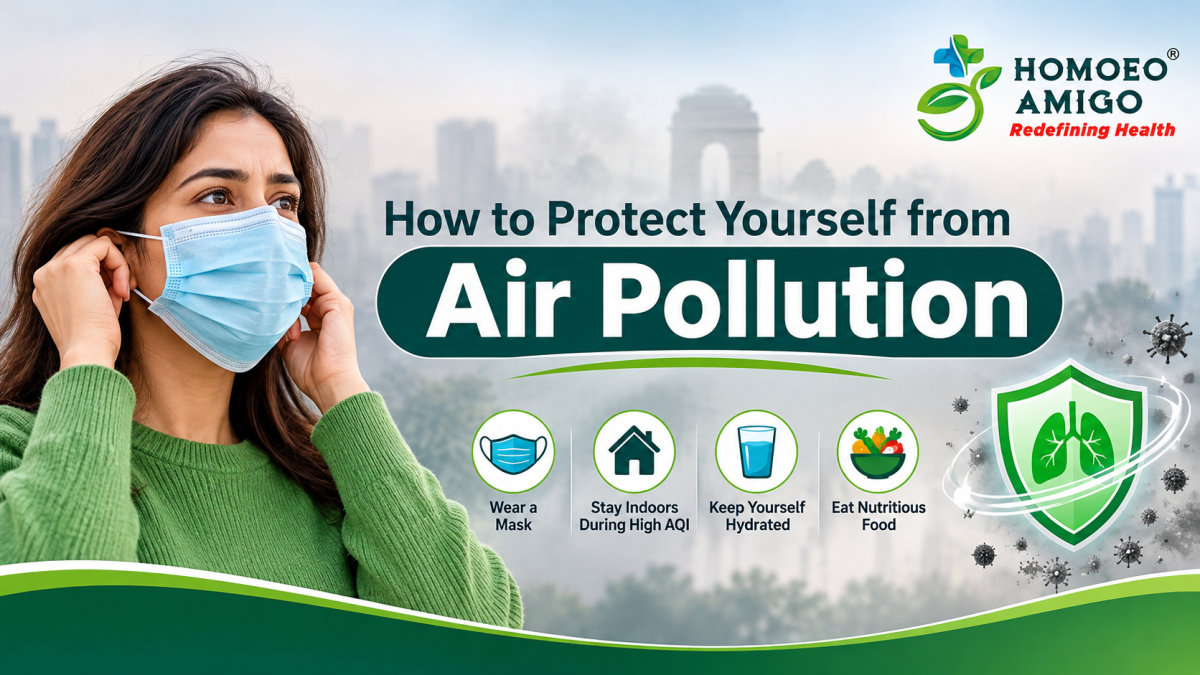
How to Protect Yourself from Air Pollution: 7 Tips
The term has become so infamous that everyone knows about it, and it is called ‘Air Pollution.’ It is not confined to Delhi or Uttar Pradesh; air pollution has become a national and emerging health crisis with devastating consequences. According to the 2026 Environmental Performance Index (EPI), India ranks 175th out of 177 countries globally in the air quality category, scoring 7.89 out of 100. Live rankings show that states like Punjab, Haryana and Rajasthan frequently exceed 300 on the Air Quality Index (AQI). People living in Delhi face a more dangerous situation due to the trapping winter season, unfavourable geography, excessive local emissions and regional stubble burning.
People are struggling to breathe every single day, a worst condition for asthma patients, old people and children. Along with breathing issues, air pollution negatively impacts neurological & mental health, pregnancy & child health, wildlife and the global environment. People are often seen complaining about these issues, which have become a part of their lives. While pollution can’t be eradicated overnight, a person can use air pollution safety tips to protect themselves.
This blog will take you to the depths of how you can protect yourselves from air pollution.
What Is Air Pollution?
It refers to the contamination of the indoor or outdoor environment owing to any physical, chemical or biological agent that changes the natural characteristics of the atmosphere.
Major Types of Pollutants
The following are the major types of pollutants that contaminate the air more than any other pollutant present.
Gases – Harmful gases like nitrogen oxides, carbon monoxide, sulphur dioxide, and ground-level ozone.
Particulate Matter (PM) – Small solid or liquid particles like smoke, ashes and dust pass through the lungs and harm them.
Primary Pollutants – These pollutants are emitted directly from a source, like car exhaust or factory smoke. These pollutants are emitted directly into the air.
Secondary Pollutants – These pollutants form through chemical reactions in the environment, such as ground-level ozone formed by sunlight interacting with vehicle emissions.
Sources of Air Pollution
Mainly, there are two sources of air pollution as follows.
Human-Made Sources – Refers to sources that are created by human beings. It includes the following:
Transportation – Includes cars, buses, trucks, trains and planes. These burn fossil fuels, release carbon monoxide and fine particles.
Agriculture – Livestock operations, pesticide application, fertiliser use and crop-residue burning release methane, particulate matter and ammonia.
Power generation and Industry – Manufacturing companies and coal-fired power plants emit nitrogen oxides, sulphur dioxide and harmful chemicals through smokestacks.
Residential and Commercial Heating – Burning coal, wood, oil or natural gas for warming homes or cooking releases ash, smoke and carbon monoxide that are hazardous to life.
Waste Management – Burning up waste and unmanaged landfills release dioxins, carbon dioxide and methane.
Natural Sources – Refers to sources that exist in nature and result in pollution. The following come in this category:
Dust Storms and Biological Agents – Mould spores, pollen, windblown dust and bacteria add rough particles and allergens to the environment.
Wildfires – Result in a large amount of smoke, carbon monoxide and particulate matter.
Volcanic Eruptions – Release ash, carbon dioxide, sulphur dioxide and other gases that cause air pollution.
What Are the Effects of Air Pollution?
Air Pollution has hazardous effects on both human beings and the environment. The World Health Organization reported seven million premature deaths associated with ambient and household air pollution.
Air pollution harms every organ in the human body. When inhaled, toxic gases and tiny particles irritate the airways and pass through the lungs into the bloodstream, which triggers inflammation and cell damage.
The effects of air pollution on the human body can be categorised into “short-term” and “long-term” effects.
Short-term effects on the human body – Exposure to polluted air like smog, heavy traffic fumes, or wildfire smoke can immediately lead to quick physical reactions.
Eye, Nose and Throat irritation – Pollutants present in the air cause coughing, wheezing, burning eyes and a scratchy throat.
Increased Respiratory Infections – Polluted air makes the lungs’ natural defence against bacteria and viruses weak, resulting in higher rates of pneumonia and bronchitis.
Worsens Asthma and Allergies – High pollution levels can swell airways, which can trigger severe asthma attacks and can result in difficulty breathing.
Long-term effects on the human body – Breathing polluted air over several months or years significantly increases the risk of severe long-term illnesses.
Chronic Respiratory Diseases – Long-term exposure to polluted air permanently decreases lung function and leads to conditions like Chronic Obstructive Pulmonary Disease (COPD).
Cardiovascular Disease – Fine Particulate Matter (PM2.5) is 30 times smaller than the width of a human hair, which means it can easily pass through your lungs, enter your bloodstream and can heavily disturb your body. It leads to heart failure, heart attacks and strokes.
Brain and Neurological Damage – Pollutants that reach the brain cause neuroinflammation, which is connected to dementia, cognitive decline, Alzheimer, and Parkinson’s disease.
Metabolic and Organ Strain – Systemic inflammation increases the risk of type 2 diabetes. Toxic particles present in the blood also overburden the liver and kidneys, leading to chronic kidney disease.
Reproductive and Pregnancy Risks – Pollutants can cross the placenta, which increases the risk of premature birth, stillbirth, low birth weight and decreased fertility.
Cancer – The WHO recognises outdoor air pollution as a human carcinogen (Any substance, organism or agent capable of causing cancer). Tiny particles alter cell growth and significantly increase the risk of lung cancer.
How to Prevent Air Pollution?
Preventing air pollution means cutting down the source of pollution through individual actions, industrial engineering, government policies and nature-based solutions.
Individual Actions
Smart Travel – Walk, ride a bicycle or use public transport to reduce vehicle emissions. Switch to hybrid or electric vehicles when possible.
Stop Open Burning – Avoid burning dry leaves, trash, plastic or wood in backyards because open smoke releases dangerous particulate matter, thus polluting the air.
Conserve Energy – Turn off lights, appliances, and computers when not in use, as it helps reduce fossil fuel combustion at power plants.
Reduce and Recycle – Product reduction and recycling cut down on energy and emissions needed to manufacture new goods.
Maintain Equipment – Keep cars well-equipped with clean air and oxygen sensors. Use manual or electric lawn tools instead of gas-powered small engines.
Industrial Engineering
Clean Energy Transition – Replacing oil and coal with renewable energy sources being solar, hydro and wind for electricity and heating.
Tall Chimneys and Zoning – Building tall industrial chimneys to scatter smoke at higher altitudes and maintaining physical distance rules between factories and residential zones.
Emission Control Devices – Factories and power plants use scientific technology to clean exhaust streams before release, such as
Scrubbers and electrostatic precipitators to catch sulphur dioxide and fine dust.
Catalytic converters in vehicles to change nitrogen oxides and carbon monoxide into safer gases.
Fabric filters and thermal oxidisers to catch particulate matter and volatile organic compounds.
Government Policies and Nature-based Solutions
Government Regulations – Implementing National Air Quality Monitoring frameworks to track vehicular and industrial emissions.
Afforestation – Planting more trees helps in the absorption of carbon dioxide via photosynthesis and catches airborne particulate matter.
How to Protect Ourselves from Air Pollution?
Pollution doesn’t only affect the lungs; it affects the entire body of an individual, including mental state as well. After knowing this, it becomes extremely important to protect ourselves from pollution, given the fact that pollution is a global problem. Precautions for air pollution are as follows:
Indoor Precautions
Smart Ventilation – Proper ventilation is extremely important for healthy indoor air, but timing needs to be considered. Open your doors and windows only when the air quality outside improves a little. On high-pollution days, keep doors and windows closed.
Use Air Purifiers – Outdoor air is polluted, but we need to understand that indoor air is also polluted. It gets polluted due to factors like cooking fumes and dust. To avoid this situation, you can use air purifiers with a HEPA (High-Efficiency Particulate Air) filter.
Add Indoor Plants – Plants like money plant, peace lilies, spider plants, snake plants, and areca palm help purify the air. In this way, these plants help keep indoor air cleaner.
Do Not Burn Wood or Waste – Avoid burning wood or waste, as they create heavy pollution and are not limited to just your household. They pollute the neighbouring areas as well.
Outdoor Precautions
Avoid Outdoor Exercises – Do not exercise in outdoor environments, as physical activity leads to faster and deeper breathing, resulting in more intake of polluted particles.
Check the Air Quality Index (AQI) – Make sure to check AQI before going outdoors. Apps like AirVisual, AQI India or the website of the Central Pollution Control Board (CPCB) provide real-time data. On days when the air quality shows as ‘very poor’ or ‘severe’, it is better not to go outside unless it’s something very important or limit outdoor activities.
Wear A Certified Mask – Always wear an N95 or N99 respirator mask. Why? Because these masks are specifically designed to filter out fine particulate matter like PM2.5. However, wearing a mask is not enough; make sure it sits tightly around your nose and mouth.
Stay Away From Heavy Traffic Areas – Avoid going to or limit your time in heavy traffic areas, as vehicles emit nitrogen oxides, PM2.5, PM10, smog, carbon dioxide, carbon monoxide and volatile organic compounds. These particles are harmful to health and are life-threatening.
Health and Diet Support
Stay Hydrated – Hydration helps keep the respiratory tract’s natural defence mechanisms (cilia and airway mucus) slippery, moist and functional so that it can trap and clear inhaled particulate matter.
Eat Antioxidant-Rich Food – It helps reduce oxidative stress & inflammation and neutralise harmful free radicals.
Regular Health Check-Ups – Prevention is better than cure, yet this is the part skipped by most people. Always get at least a lung test every year. Do not wait for something bad to occur. Find any problem early and take necessary precautions to remove the problem.
These steps look very small, but when performed daily, they come up as air pollution safety tips. So, it is important to follow these steps diligently to protect ourselves from air pollution.
Understanding Levels of AQI and Their Meaning for You
Air Quality Index is a standard colour-coded scale with numbers between 0 and 500. It is used by local pollution boards or environmental agencies to tell you how clean or polluted the outside air is and what health effects you might experience from breathing this air for a few hours or days.
Number | Meaning | Category | Colour |
0-50 | Satisfactory air quality, minimal health risk | Good | Green |
51-100 | Sensitive individuals may experience minor breathing discomfort | Satisfactory | Light green |
101-200 | People with asthma or some other lung disease may experience breathing discomfort. Can also cause discomfort to children, older adults or people with heart disease. | Moderately Polluted | Yellow |
201-300 | Breathing discomfort to almost every person on long exposure, and discomfort to people with heart disease on short exposure. | Poor | Orange |
301-400 | Respiratory illness in people with long exposure to air; more hazardous effects on people with heart or lung disease. | Very Poor | Red |
401-500 | Can impact the respiratory system of even healthy people; serious health effects on people with lung or heart disease. Health can be impacted during light physical activity as well. | Severe | Maroon |
Why is Protection from Air Pollution Non-Negotiable in Indian Cities?
The Constitution of India provides the Right to Clean Air under Article 21 to Indian citizens. However, the ground reality is something else. Indian cities are heavily polluted; the air quality is often marked as “very unhealthy” or “severe”, thus threatening the lives of citizens. This violates the fundamental rights of citizens. Given below are reasons why protection from air pollution is non-negotiable in our cities:
Health and Public Safety
Sensitive Populations – Children, pregnant women, elderly people and outdoor workers face the biggest danger from air pollution. They can face conditions like irritation in the throat, eyes and lungs. Along with this, they are also sensitive towards chronic neurological and developmental impacts.
Organ Damage – Inhaling toxic gases and PM 2.5 can damage the lungs and the respiratory system and can increase the risk of strokes, heart disease and chronic bronchitis.
Year-Round Hazard – Pollution makes headlines during winter only, but vehicular emissions and construction work go on throughout the year, thus making pollution a year-round hazard.
Government Regulations and Implementation Gaps
Gap in Rules and Implementation – India is not having absence of rules or legislation like the Air (Prevention and Control of Pollution) Act of 1981. There is an implementation gap; there are systemic gaps in implementation, scattered municipal oversight and weak coordination among micro, small and medium enterprises (MSMEs).
Beyond Short-Term Actions – Measures like odd-even traffic rules or the Graded Response Action Plan (GRAP) are not enough to control pollution. These are just short-term actions that can work only for a short span of time. To solve the bigger issue, a systemic shift is needed. Expanding green belts, electrifying public transport and transitioning energy systems require time and commitment, but these steps are a better alternative to our present short-term actions.
Special Protection from Pollution for High-Risk Groups
Indian government has introduced particular health advisories and frameworks to protect high-risk groups from severe air pollution.
National Programme on Climate Change and Human Health (NPCCHH)
It is managed by the National Centre for Disease Control (NCDC), which coordinates multi-sectoral interventions and tracks Acute Respiratory Illnesses (ARI) through sentinel hospitals. This programme implements a Health Adaptive Plan for diseases caused by air pollution.
National Clean Air Programme (NCAP)
This programme was launched in 2019 by the government to prevent, control and reduce air pollution across India and improve the surrounding air quality in targeted urban areas.
Graded Response Action Plan (GRAP)
It ties healthcare resource allocation, public health advisories and restrictions directly to the AQI scale that ranges from good to severe.
Screening of High-Risk Patients and Digital Tracking
As per the guidelines under the Ministry of Health and Family Welfare, healthcare facilities must screen patients for pollution-intensified conditions and maintain digital registries through the Integrated Health Information Platform (IHIP).
Community-Based Follow-Up
Details of sensitive high-risk individuals are conveyed to local administrative blocks for ground-level monitoring and to reach the individuals through ASHA, Community Health Officers (CHO) and ANM.
Homeopathy for Respiratory Health
The Central Council for Research in Homoeopathy (CCRH), an apex body under the Ministry of AYUSH, conducts clinical studies on using homeopathy as an independent treatment for mild acute respiratory tract infections and as an add-on therapy for chronic conditions like asthma.
Why Homeopathy Works?
The fact that there is not enough research to prove homeopathy’s effectiveness on respiratory conditions, people often report feeling better after using homeopathic medicines. This is because homeopathic consultations are tailored to the specific symptoms and needs of the individual.
Conclusion
‘How to avoid air pollution?’ can be a question in your mind. Avoiding pollution completely is slightly unrealistic, but we can definitely protect ourselves and high-risk groups from air pollution by following the cautions mentioned in the blog. However, individuals already having respiratory issues need not only to protect themselves but also need to manage their issues. Individuals looking for a solution can book an online homeopathic consultation to discuss their problem.
Living with pollution is extremely difficult. At Homoeo Amigo, we care about your child's health and provide tailored solutions for your child. Patients can freely discuss their health concerns, recurring symptoms and medical history during consultation. It is important to notice that homeopathic consultation does not mean leaving your doctors or medicines. In the end, everybody deserves to live a healthy life.
Comments (0)
Loading comments...