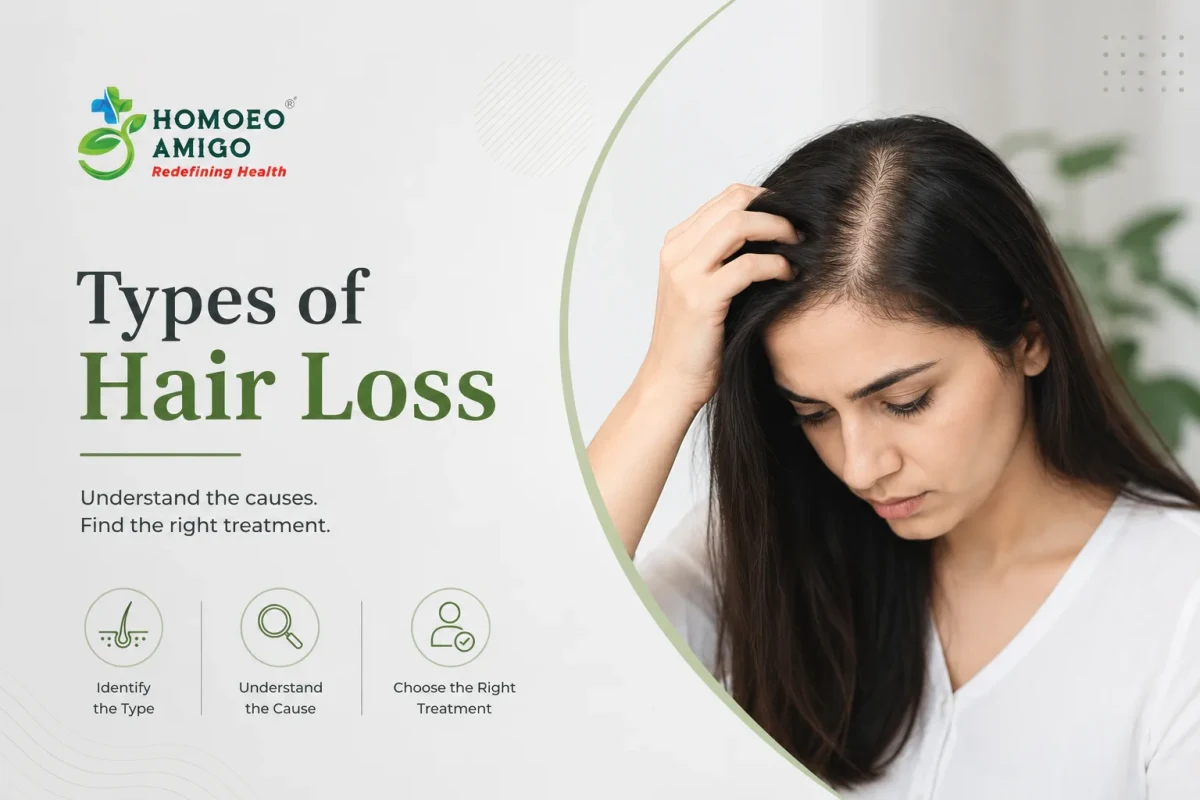
Types of Hair Loss: Understanding The Difference
Hair fall is one of those issues that almost everyone faces at some point, but most people completely misunderstand it. They treat all kinds of hair loss the same way, which leads to wrong solutions, wasted money, and frustration. Not all hair fall is the same, and if you don’t understand the type, the cause won’t get fixed.
Let’s Understand What “Normal” Hair Loss Is:
Losing 50-100 strands per day is completely normal. Hair naturally goes through cycles: growth, rest, and shedding. The real problem starts when hair fall suddenly increases, hair becomes thinner over time, and you notice visible scalp or a receding hairline. You may notice this shedding while brushing your hair, washing it, or finding a few strands on your pillow or clothing. However, if you start experiencing noticeable thinning, widening of the hair part, excessive hair fall during routine activities, or the appearance of bald patches, it could indicate an underlying issue that deserves attention.
Types of Hair Loss:
Hair loss does not affect everyone in the same way, and it can occur in different forms depending on its underlying cause. Some types of hair loss develop gradually over time, while others may appear suddenly due to factors such as stress, hormonal changes, medical conditions, or immune system responses. Understanding the various types of hair loss can help in identifying the pattern of shedding and seeking appropriate care.
Some common types of hair loss include:
Temporary Hair Fall or Telogen Effluvium
It is the shedding phase and the most common type. It is usually reversible. You will notice a sudden increase in hair shedding, hair comes out while washing, combing, or even touching, but there are no clear bald patches. It can be caused by stress, both physical and mental, illness, fever or infections, crash dieting or poor nutrition, and hormonal shifts. If you are experiencing this, then expensive treatments alone cannot fix it, as it requires lifestyle changes as well.
Pattern Hair Loss or Androgenetic Alopecia
It is genetic hair loss, and this is where things get serious, as it can be permanent if it is ignored. You notice gradual thinning of hair over time and a receding hairline, especially in men, a widening part, or thinning crown in women. This can be caused by genetics if you have a family history, and hormones, especially DHT (dihydrotestosterone). In the case of pattern hair loss, no oil, shampoo, or DIY hack can cure this, but it can be slowed down with proper treatment.
Patchy Hair Loss or Alopecia Areata
It is an autoimmune condition. It is less common but is a more aggressive type. You will notice sudden bald patches, smooth, round areas with no hair, which can spread quickly. It is usually caused by autoimmune conditions where the body attacks the follicles, and it is also sometimes linked with stress and genetics. This is not a cosmetic problem but a medical issue, and delaying treatment can make it worse.
Traction Alopecia
It is damaged from styling. It is entirely self-inflicted, but it is rarely acknowledged. Constant pulling damages the hair follicles, and it can be recognized by hair loss around temples or the hairline, gradual thinning in stressed areas, and is commonly seen in people with tight hairstyles. Some common causes are tight ponytails, buns, or braids, extensions or wigs, and repeated styling tension. If it is caught early, it can be reversible, but if ignored, it can become permanent.
Anagen Effluvium
It is a severe hair loss phase with rapid and intense hair loss. You will notice that the hair falls out during the growth phase and not the resting phase, very fast hair loss over days or weeks and often includes eyebrows and body hair. Some common causes are chemotherapy, radiation, and toxic exposure.
Breakage vs Hair Fall
Many times it is misdiagnosed. A lot of people think they have hair fall, but actually it is hair breakage. It mostly looks like short and broken strands. The hair is frizzy and weak, and it does not fall from the roots, but it snaps from mid-length. This kind of breakage is caused by excessive heat styling with straighteners and curlers, chemical treatments like color or rebonding, and over-washing or using harsh hair products.
How Homeopathy Helps with Different Types of Hair Loss
Homeopathy cannot magically treat hair loss. It works differently, and if it is used correctly, it targets the root cause of the issue and not just the symptoms. Homeopathy can be effective in cases of telogen effluvium, early-stage pattern hair loss, alopecia areata in some cases, and hormonal or stress-linked hair issues.
It works on individual constitution and not just the condition and aims to balance the internal triggers like hormones, stress response, and nutritional absorption. It uses personalized remedies instead of similar medicines for everyone. However, homeopathy requires patience and proper diagnosis.
Choosing The Right Guidance
Expert guidance makes a huge difference when it comes to treating hair loss. With Homoeo Amigo, the approach is:
Personalized care analysis.
Root-cause-based treatment.
Focus on long-term hair health and not just temporary fixes.
It’s time to understand your hair loss type properly, get personalized treatment, and start treatment that actually targets the root cause. Connect with Homoeo Amigo today and take the first step towards real and lasting recovery.
Hair loss is not a single problem, it is a category of conditions that look similar but behave differently. It is important to understand the types of hair loss because if you don't understand the type of hair loss you are dealing with, you will end up treating the wrong problem. The solution does not lie in different and expensive products, it lies in better understanding and the right approach.
Comments (0)
Loading comments...