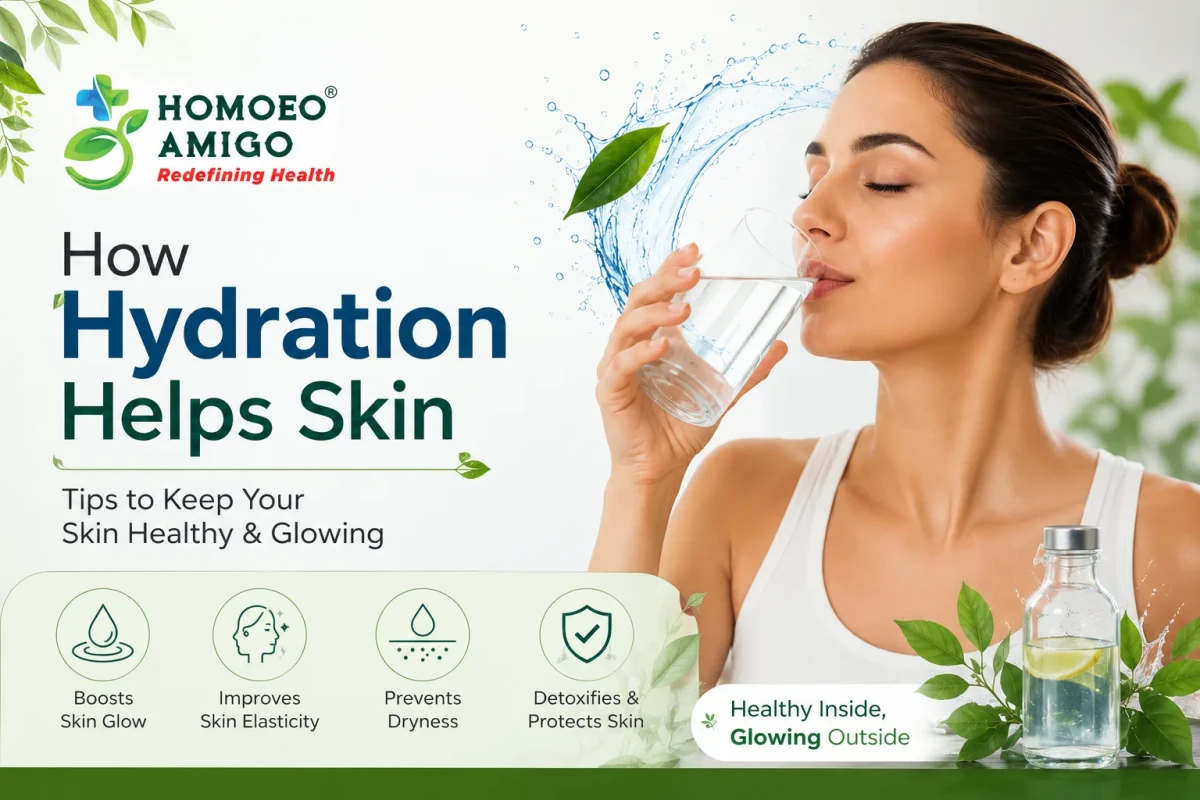
How Hydration Helps Skin: Tips to Keep Your Skin Healthy
Everyone dreams of having healthy and glowing skin. While skincare products, serums and moisturizers play an important role, many people overlook one of the simplest secrets to healthy skin - HYDRATION.
Understanding how hydration helps skin can completely change the way you care for your skin. Hydration is not just about drinking enough water, it also involves maintaining your skin’s moisture barrier and ensuring your body gets the fluid it needs to function properly. When your skin is well-hydrated, it looks plumper, smoother, and more radiant. On the other hand, dehydrated skin can appear dull, flaky, rough and more prone to irritation and premature ageing.
Let’s discover how hydration helps skin, improves elasticity, reduces redness, and promotes a natural glow and learn expert hydration tips from Homoeo Amigo.
What Does Skin Hydration Mean?
Skin hydration simply means the amount of water present in the outer layers of the skin. A well hydrated skin barrier helps to retain moisture, protect against environmental damage, prevent excessive water loss, keep skin soft and supple and support healthy skin cell function. Unlike oily skin, hydrated skin simply has enough water to function properly.
How Hydration Helps Skin?
Healthy, glowing skin starts with proper hydration. While skincare products can improve the skin's appearance, hydration works from within to support its natural functions. When your body and skin have enough moisture, the skin looks softer, feels smoother, and is better able to protect itself from everyday environmental stress. Understanding how hydration helps your skin can make it easier to build habits that support long-term skin health.
There are several ways how hydration helps skin in maintaining its natural health and beauty.
Keeps skin soft and smooth: One of the biggest reasons how hydration helps skin is by improving skin texture. Hydrated skin feels softer, looks healthier, reduces rough patches, minimizes flaky areas and makes makeup apply more evenly. Without enough hydration, skin becomes dry, rough, and uncomfortable.
Improves skin elasticity: Water supports collagen and elastin, these are the proteins responsible for skin firmness. This is one of the major reasons how hydration helps skin slow down visible signs of aging.
Gives you skin a natural glow: Healthy skin reflects light better. Hydrated skin appears bright, fresh, dewy, radiant and even-toned. If your skin looks tired despite using skincare products, dehydration could be the hidden reason.
Strengthens the skin barrier: The skin barrier protects you from pollution, dust, allergens, harmful bacteria and irritants. One of the most important ways how hydration helps skin is by strengthening this protective barrier. A healthy barrier prevents moisture loss while protecting against external damage.
Reduces dryness and flakiness: Dry skin often results from insufficient moisture. Hydration helps prevent peeling, reduce itchiness, minimizes skin tightness, improves comfort and restores softness. People with eczema or naturally dry skin especially benefit from proper hydration.
Helps reduce fine lines: Dehydrated skin often develops temporary fine lines whereas hydrated skin looks plumper, appears smoother, minimizes dehydration lines and makes wrinkles less noticeable. Although hydration does not remove wrinkles permanently, it significantly improves skin appearance.
Supports healthy skin: Your skin continuously replaces old cells with new ones. Proper hydration helps healthy cell turnover, faster skin repair, better healing, improves skin texture and brighter complexion. Healthy skin renewal is another reason how hydration helps skin maintain a youthful appearance.
Helps control oil production: Many people think oily skin does not need hydration but in reality dehydrated skin may produce more oil, lack of water signals sebaceous glands and excess oil can clog pores making breakouts become more common. Proper hydration balances oil production naturally.
Helps prevent acne: While hydration alone does not cure acne, it supports healthier skin. Hydrated skin maintains a balanced barrier, reduces irritation, helps skincare products work better and supports healing after breakout.
Protects against environmental damage: Everyday the skin faces UV rays, pollution, dust, heat and air conditioning. Hydrated skin is more resilient and better equipped to recover from.
Signs Your Skin is Dehydrated
Dehydrated skin can affect anyone, regardless of skin type. Even oily skin can become dehydrated when it lacks enough water. Recognizing the early signs is important because dehydration can make your skin look dull, feel uncomfortable, and become more prone to irritation. Here are some common signs that your skin may be dehydrated.
Tightness after washing.
Dull complexion.
Fine dehydrated lines.
Rough texture.
Flaky patches.
Increased sensitivity.
Redness.
Makeup setting into lines.
Itchy skin.
Recognizing these signs early helps to prevent long-term skin damage.
Common Causes of Skin Dehydration:
Skin dehydration can happen for many reasons, from everyday habits to environmental factors. Weather changes, inadequate water intake, harsh skincare products, and prolonged exposure to air conditioning or heating can all reduce your skin's moisture levels. Identifying these common causes is the first step toward preventing dehydration and keeping your skin healthy, balanced, and comfortable. These include:
Drinking insufficient water
Excess caffeine
Alcohol consumption
Hot shower
Over-exfoliating
Air conditioning
Cold weather
Excess sun exposure
Lack of moisture
Best Ways to Keep Your Skin Hydrated:
Aim for adequate daily water intake. Your needs depend on your activity level, climate, body weight and medical condition. Water supports every cell of your body, including the skin cells.
Eat water-rich foods as any fruits and vegetables naturally hydrate your body. Include watermelon, cucumber, tomatoes, oranges, strawberries, lettuce, celery and coconut water in your meals. These foods also provide vitamins and antioxidants.
Use a gentle cleanser and avoid the products that strip natural oils from the skin. Choose cleansers that maintain skin balance, preserve moisture, are fragrance-free if you have sensitive skin.
Apply moisturizer immediately after cleansing as moisture locks in hydration. Look for ingredients like hyaluronic acid, glycerin, ceramides, squalane, aloe vera, and panthenol. Never skin sunscreen. Sun damage weakens the skin barrier. Daily sunscreen helps to prevent dehydration, reduce UV damage, maintain healthy skin, and prevent premature ageing.
Avoid very hot water as it can remove natural oil and instead use lukewarm water, limit shower time and moisturize immediately afterwards. Use a humidifier. Indoor heating and air conditioning reduce humidity. A humidifier adds moisture to the air, prevents skin from drying and supports skin barrier health. Get enough sleep because the skin repairs during sleep. Aim for 7-9 hours of sleep, consistent sleep schedule and good nighttime skincare.
Does Drinking More Water Cure Dry Skin?
This is a common misconception. The answer depends on the cause. If dry skin results from poor hydration and mild dehydration then increasing the water intake may help. However, if dryness is caused by eczema, psoriasis, aging and skin barrier damage then it needs proper skincare and medical guidance.
Understanding how hydration helps skin is one of the simplest yet most effective ways to improve your skincare routine. From maintaining the skin barrier and improving elasticity to reducing dryness and promoting a healthy glow, proper hydration supports your skin both inside and out. Healthy skin is not something that can be achieved overnight, it requires consistent habits, balanced nutrition and adequate water intake. Whether you have dry, oily or combination skin, staying hydrated can make a noticeable difference in how your skin looks and feels.
Comments (0)
Loading comments...