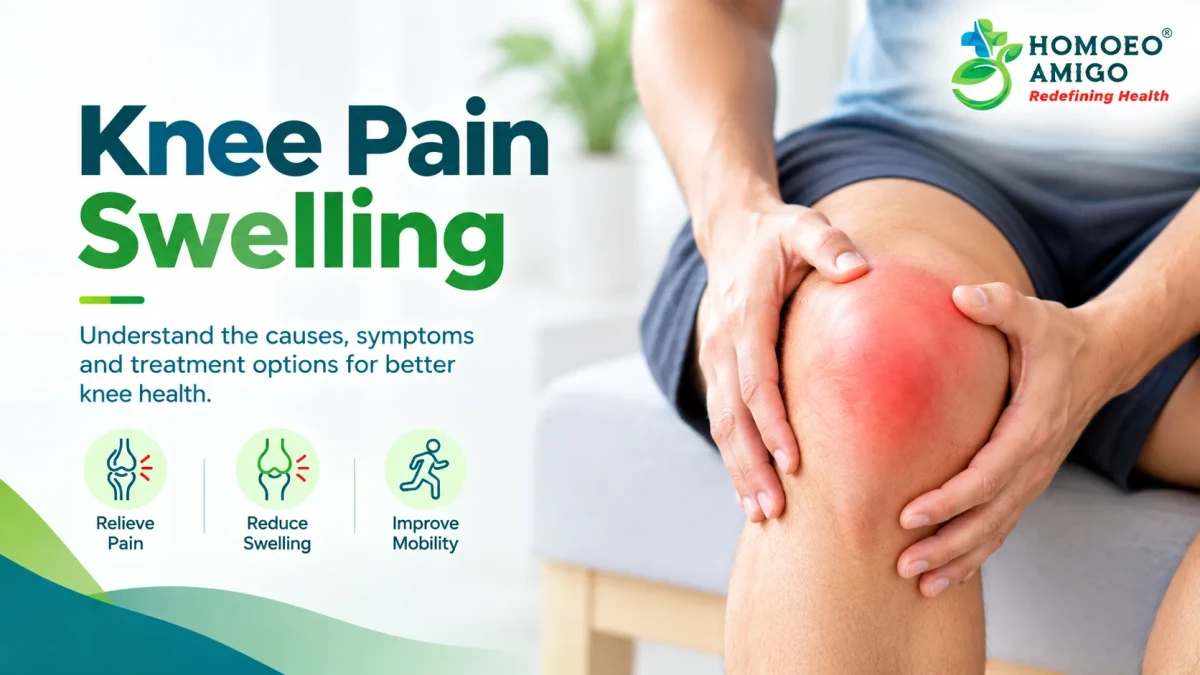
Knee Pain Swelling: Causes & Treatment Guide
You wake up one morning and notice that your knee looks a little puffier than usual. Maybe it hurts when you bend it, feels stiff when you walk, or seems heavier than the other knee. Knee pain with swelling is common, but it isn’t a condition in itself. It usually signals that something is irritating or affecting the structures inside or around the knee. The cause can range from a recent injury to arthritis, overuse or inflammation. Understanding why your knee is swollen can help you decide when simple care may be enough and when it is time to see a healthcare professional.
What Causes Knee Pain and Swelling?
The knee contains bones, cartilage, ligaments, tendons, and a small amount of fluid that helps the joint move smoothly. When the knee becomes irritated or injured, excess fluid can build up around the joint, resulting in swelling. Some common causes of knee pain and swelling include:
Knee injuries: Falls, sudden twists, sports injuries and direct impact can damage ligaments, tendons or cartilage.
Sprains and strains: Stretching or tearing of supporting tissues can cause pain, tenderness and swelling.
Meniscus injury: A sudden twisting movement can damage the meniscus, which cushions the bones of the knee.
Arthritis: Conditions such as osteoarthritis can cause pain, stiffness and recurring swelling.
Overuse: Repetitive activities such as running, squatting or climbing can irritate the knee.
Bursitis: Inflammation of the small fluid-filled sacs around the joint can lead to localised swelling.
Gout or other inflammatory conditions: These can sometimes cause sudden and significant pain and swelling.
The location and timing of the swelling can provide clues, but they are not enough to diagnose the problem on their own.
What Does a Swollen Knee Feel Like?
Swelling can look different depending on its cause. Some people notice obvious puffiness, while others simply feel that the knee is tight or difficult to move. You may experience:
Visible swelling around the knee.
Pain while walking or bending.
Stiffness.
A feeling of pressure or fullness inside the joint.
Warmth around the affected area.
Tenderness.
Reduced range of motion.
Difficulty putting weight on the leg.
If swelling develops immediately after an injury, particularly alongside severe pain or difficulty bearing weight, the knee should be evaluated rather than simply treated at home.
What Can You Do for Knee Swelling at Home?
For mild swelling following activity or a minor injury, some basic measures may provide temporary relief.
Rest: Reduce activities that make the pain or swelling worse.
Ice: A cold pack wrapped in a cloth can be applied for short periods to help with pain and swelling. Never put ice directly on your skin.
Compression: A suitable elastic bandage may provide support, but it should not be excessively tight.
Elevation: Raising the affected leg can help reduce swelling.
These measures may help manage symptoms, but they don’t identify the underlying cause. If the swelling continues or repeatedly returns, professional evaluation is more appropriate than repeatedly treating the symptom.
How is Knee Pain and Swelling Treated?
There is not one treatment that works for every case of knee pain and swelling. Treatment depends on the underlying cause. Minor injuries may improve with rest and gradual rehabilitation. Physiotherapy may be recommended if stiffness, reduced strength or restricted movement is affecting daily activities.
More significant injuries or conditions may require medication, specialist evaluation, imaging, injections or surgery, depending on the diagnosis. This is why treating only the swelling is not always enough. Finding out what is causing it is the more important step.
Can Physiotherapy Help With Swollen Knee?
Physiotherapy can be useful when knee pain and swelling are associated with injury, weakness, stiffness or difficulty moving the joint. A physiotherapist may assess your movement, muscle strength, flexibility and functional limitations before creating a rehabilitation plan. The exercises and techniques used will depend on the cause and stage of the problem.
If you are looking for physiotherapy for knee pain in Delhi, Homoeo Amigo has physiotherapy centres in Malviya Nagar and Mayur Vihar. These centres can be relevant for people who need rehabilitation for knee-related problems, sports injuries, muscle strains or ligament-related issues. However, physiotherapy should not replace urgent medical evaluation when there is a suspected fracture, major ligament injury, dislocation or another serious condition.
A swollen knee is your body’s way of telling you that something needs attention. Sometimes it may settle with rest and simple care. Other times, persistent swelling can point to an injury, inflammation or an underlying joint problem. The key is not to ignore symptoms simply because the pain isn’t severe. If your knee pain and swelling persist, keep returning, or interfere with walking and everyday activities, getting the cause assessed is a better approach than repeatedly masking the symptoms.
Listen to your knee, understand the cause, and choose the right care for the problem.
Comments (0)
Loading comments...