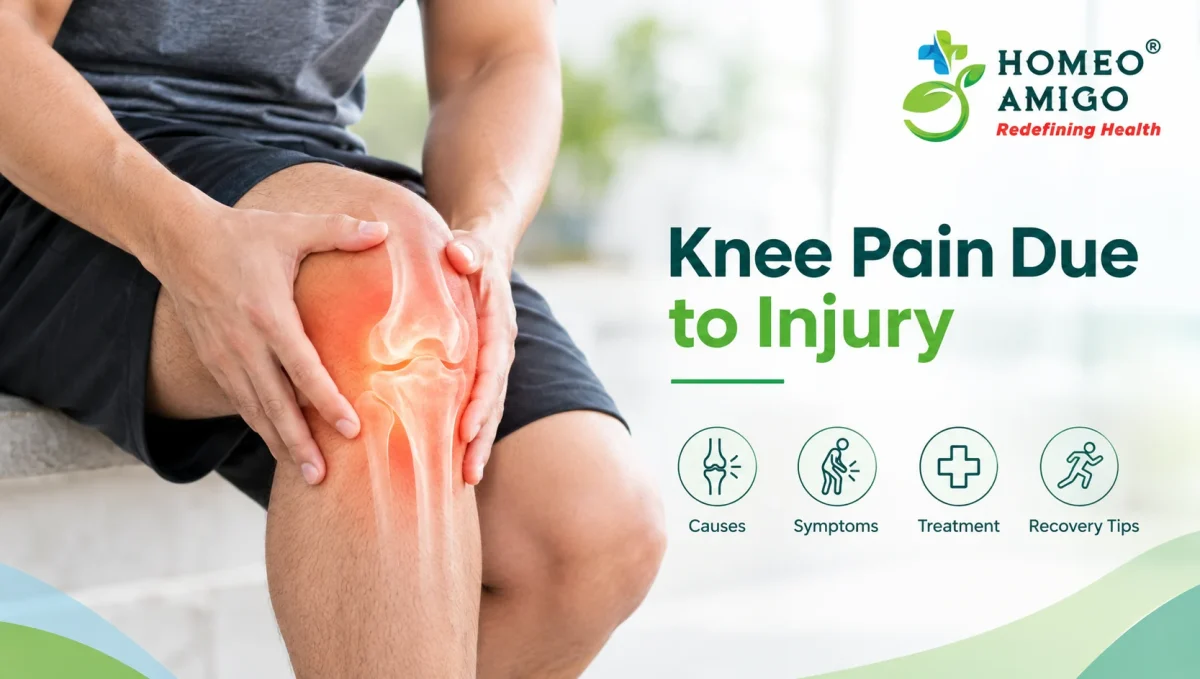
Knee Pain Due to Injury: Causes & Treatment
A twisted knee during a game. A bad landing after a jump. A sudden fall on the stairs. Sometimes knee pain starts with one small moment, and suddenly, walking, sitting, or climbing stairs becomes uncomfortable. Knee pain due to injury is common, but not every injury is the same. A minor strain may improve with rest, while damage to a ligament, cartilage, or bone may require proper medical evaluation. Understanding what may be causing the pain can help you decide what to do next.
What Causes Knee Pain After Injury?
The knee is a complex joint made up of bones, ligaments, tendons, cartilage and muscles. An injury to any of these structures can result in pain. Some common causes of knee pain due to injury include:
Sprains: Stretching or tearing of the ligaments that support the knee.
Strain: Injury to muscles or tendons around the knee.
Ligament injuries: The ACL, MCL, LCL, and PCL can be injured during sports, sudden movements or falls.
Meniscus injuries: A sudden injury where the bones forming the joint are forced out of their normal position.
Knee dislocation: A serious injury where the bones forming the joint are forced out of their normal position.
Fractures: A fall or direct impact can cause a fracture around the knee.
Tendon injuries: Sudden force or overuse can affect tendons such as the patellar tendon.
The sensitivity of pain does not always tell you how serious an injury is. A seemingly manageable injury can sometimes involve structures that need professional assessment.
Symptoms to Watch For
Pain is the most obvious symptom, but an injured knee may show other signs too. Depending on the injury, you may experience:
Swelling around the knee
Bruising
Stiffness
Difficulty bending or straightening the knee
Pain while walking or putting weight on the leg.
Feeling that the knee is unstable.
Clicking or popping during movement.
Tenderness around the injured area.
If the knee becomes severely swollen immediately after an injury, you cannot bear weight, the joint looks deformed, or you heard a significant “pop” at the time of the injury, it is important to seek prompt medical attention.
What should you do immediately after a knee injury?
Your first response after an injury can make a difference. For a minor injury, you can initially:
Rest: Avoid activities that increase the pain. Give the knee time to settle.
Ice: Applying a cold pack wrapped in a cloth for short periods may help reduce pain and swelling. Avoid placing ice directly on the skin.
Compression: An appropriate elastic bandage may provide support and help manage swelling, but it should not be so tight that it causes numbness or changes in circulation.
Elevation: Keeping the leg elevated may help reduce swelling.
These measures can be useful for short-term symptom management, but they do not determine the underlying cause of the injury.
When Should You See a Doctor?
Not all knee injuries need the same treatment. If pain continues, gets worse, or interferes with normal activity, consider getting the knee evaluated. You should seek medical attention particularly if:
You cannot put weight on the injured leg.
Your knee is significantly swollen.
The knee locks or repeatedly gives way.
You cannot fully bend or straighten it.
There is significant bruising or deformity.
Pain does not improve with basic self-care.
You suspect a major fracture or ligament injury.
A healthcare professional may examine your knee and, depending on the suspected injury, recommend investigations such as an X-ray or MRI.
How is Knee Pain Due to Injured Knee Treated?
Treatment depends entirely on what has been injured and how severe the injury is. Minor strain and sprains may improve with rest, gradual movement and rehabilitation. Physiotherapy may be recommended to restore mobility, strength and stability.
More serious injuries may require additional treatment. For example, certain fractures or major ligament injuries may need specialist care or surgery. This is why simply treating the pain without understanding its cause is not always a good approach.
Looking for Knee Injury Care in Noida and Delhi?
If your knee pain started after a fall, sports injury, twist, strain or other physical injury, getting the right assessment is important. The next step may depend on whether the injury involves a muscle, tendon, ligament, cartilage, or bone. For people searching for homeopathic clinics and homeopathic doctors in Noida and Delhi where patients can consult qualified homeopathic practitioners about their health concerns. However, when knee pain is specifically related to an injury, physiotherapy can play an important role in rehabilitation, particularly when the goal is to restore movement, strength and function after an injury. Homoeo Amigo provides physiotherapy services focused on areas including sports injuries, joint problems and post-surgical rehabilitation.
Knee pain due to an injury should not automatically be dismissed as “just a sprain.” The knee contains several structures that can be affected by a fall, twist, impact or sudden movement, and the right treatment depends on the underlying cause.
If your pain is mild, basic first-aid measures and rest may help initially. But persistent pain, swelling, instability or difficulty walking deserves proper evaluation. Your knee does not have to hurt forever just because the injury happened quickly. Understanding the injury and getting the right care is the first step toward getting back on your feet.
Comments (0)
Loading comments...