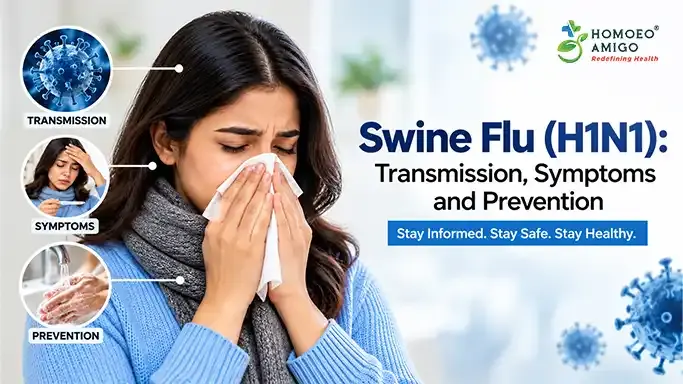
Swine Flu (H1N1): Know the Symptoms, Understand the Risks and Take the Right Steps
Think flu is Just another Viral Infection”? Think Again.
H1N1 flu, commonly known as swine flu, can begin with symptoms that look very similar to an ordinary seasonal flu. A little fever, body aches, tiredness, cough, and suddenly, you may find yourself feeling completely drained.
The good news? Knowing what to look for and taking the right precautions early can make a big difference. At Homoeo Amigo, we believe health awareness should be simple, practical and easy to understand. Whether you are a parent worried about your child, someone caring for an elderly family member, or simply trying to protect yourself during flu season, understanding H1N1 is a good place to start.
What Exactly is H1N1 Flu?
H1N1 is a strain of influenza A virus that can cause respiratory illness. It spreads mainly through respiratory droplets and small particles released when an infected person coughs, sneezes, talks, or breathes. It can also spread when people touch contaminated surfaces and then touch their mouth, nose or eyes. H1N1 can affect people of different age groups, although some individuals are at higher risk of developing complications. The infection may be mild in many people, but in some cases it can become serious and require medical attention.
Simply put, H1N1 is not something to panic about, but it is something to take seriously.
H1N1 Symptoms: What Should You Watch For?
One reason H1N1 can be tricky to identify is that its symptoms can resemble those of other respiratory infections. Common symptoms may include:
Fever or feeling feverish
Cough, often dry
Runny or blocked nose
Headache
Body aches and muscle pain
Chills
Fatigue or unusual tiredness
Weakness
Reduced appetite
Some people may also experience:
Nausea
Vomiting
Diarrhoea
Children can sometimes experience gastrointestinal symptoms more commonly than adults. Swine flu cannot be confirmed simply by looking at symptoms. Several respiratory infections can cause similar complaints. If symptoms are significant, persistent or worsening, a healthcare professional can assess whether further testing or evaluation is appropriate.
How Does H1N1 Spread?
Think about what happens during a typical day: someone coughs in a crowded metro, a child sneezes at school, someone touches a door handle after wiping their nose, or touches the same surface and then rubs their eyes. Respiratory viruses can move through these everyday interactions. H1N1 can spread through:
Coughing and sneezing
Close contact with an infected person
Respiratory droplets and particles
Touching contaminated surfaces and then touching your face
Spending time in crowded or poorly ventilated spaces
This is why basic hygiene is not “extra”; it is your first line of defence.
Who Needs to Be More Careful?
While anyone can develop influenza, some people have a higher risk of serious illness or complications. Extra caution is particularly important for:
Young children
Older adults
Pregnant women
People with asthma or other chronic respiratory conditions
People with certain heart conditions
Individuals with diabetes
People with weakened immune systems
Individuals with other chronic medical conditions
For people in higher-risk groups, flu-like symptoms should not simply be ignored or self-managed for too long.
H1N1 in Children: What Parents Should Know
Children can catch influenza and may sometimes develop symptoms quickly. Parents should keep an eye out for:
Fever
Persistent cough
Breathing difficulty
Unusual sleepiness
Poor fluid intake
Significant weakness
Irritability or behavioural changes
Vomiting and diarrhoea
Seek urgent medical attention if a child develops signs such as:
Difficulty breathing
Blush or greyish lips or face
Severe dehydration
Extreme drowsiness or difficulty waking
Seizures
Severe or rapidly worsening symptoms
If your child looks seriously unwell, getting professional medical help is more important than trying to identify the exact strain of flu at home.
H1N1 and Older Adults
For older adults, influenza can sometimes lead to complications such as pneumonia or worsening of existing medical conditions. Family members and caregivers should pay attention to sudden weakness, persistent fever, breathing difficulties, reduced appetite or fluid intake, or worsening of existing health conditions. Sometimes, older adults may not develop a very high fever despite being seriously ill. A noticeable change in behaviour, alertness or breathing can be just as important as the thermometer reading.
How Can You Reduce the Risk of H1N1?
You don’t need a complicated routine. A few consistent habits can significantly reduce your exposure to respiratory infections. Make these habits part of your everyday routine:
Wash your hands regularly with soap and water.
Use alcohol based hand sanitiser.
Avoid touching your eyes, nose and mouth with unwashed hands.
Cover your mouth and nose when sneezing.
Prefer your elbow or a tissue rather than your bare hands.
The influenza vaccine is one of the important tools available for reducing the risk of influenza and its complications. Whether vaccination is suitable for you or your family depends on factors such as age, health status, pregnancy and local recommendations. Speak with a qualified healthcare professional about whether an influenza vaccine is appropriate for you.
What About Homoeopathy Treatment for Swine Flu?
At Homoeo Amigo, we understand that many people explore complementary approaches when dealing with respiratory complaints. However, it is important to be medically responsible about H1N1. If you are considering homeopathy for symptom management or general wellness, discuss it with a qualified practitioner and make sure they know about any conventional medicine or treatment you are taking.
At Homoeo Amigo, our approach is centred around responsible healthcare, informed choices and patient well-being. Our goal is to make healthcare conversations more approachable and accessible. Whether you’re looking for guidance regarding common health concerns, want to understand your symptoms better, or need professional advice about your overall health, our clinics aim to provide a patient-focused environment where your concerns can be heard.
Because good healthcare isn’t just about treating illness. It is also about knowing when to act, knowing what to ignore, and making informed decisions about your health.
Comments (0)
Loading comments...