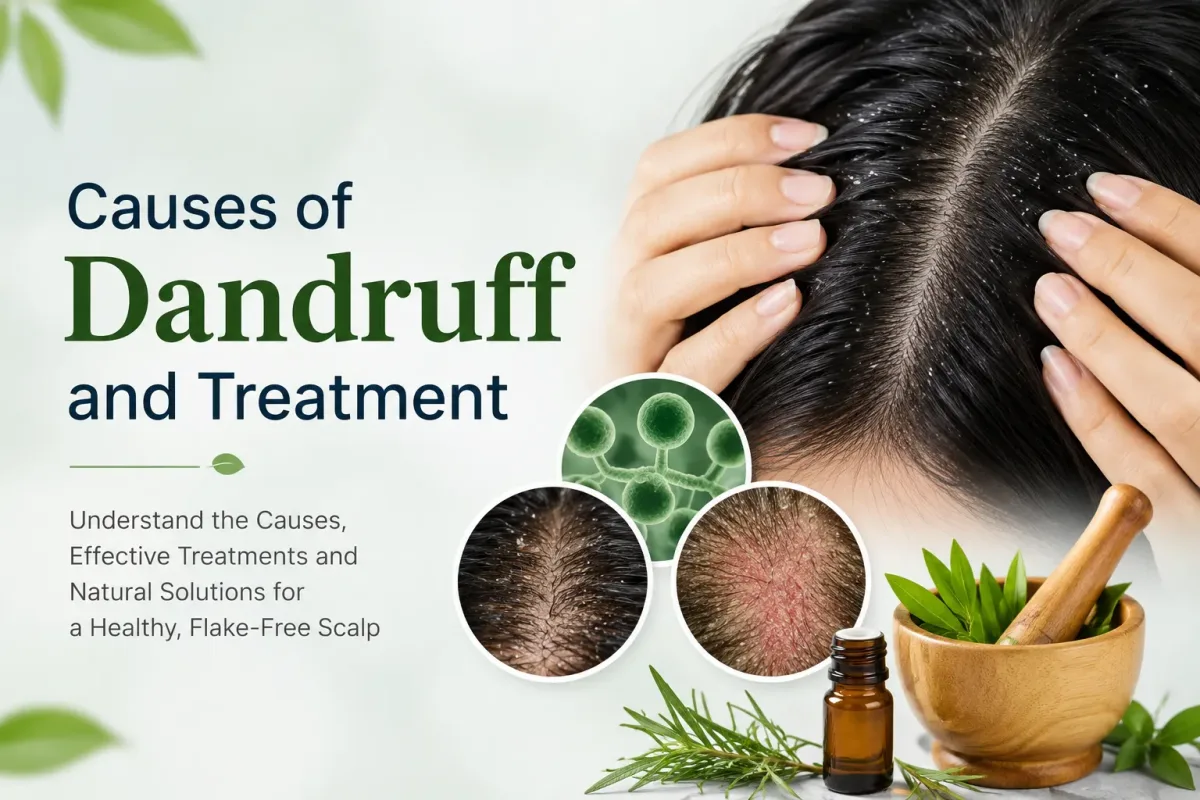
Causes of Dandruff and Treatment: A Practical Guide
Dandruff is a problem that most people ignore or completely misunderstand. It is so common that it affects about half the global adult population. Many people deal with it, thinking it is just a dry scalp, and it can be treated simply with anti-dandruff shampoos. But that does not help, and as a result, it keeps coming back. If you actually want to fix this issue and not just temporarily hide it, then you need to understand clearly what dandruff is, what the causes of dandruff are, and its treatment, because dandruff is not just a condition, it is a symptom with multiple treatments.
What Really is Dandruff?
Dandruff is the excessive shedding of dead skin cells from the scalp. It often comes with white or yellow flakes, itching, and scalp irritation. It is commonly linked to seborrheic dermatitis, which is a mild form of eczema. So the truth is, dandruff is not just dryness, and in most cases, it is often linked to oil and fungus. It is not caused by poor hygiene, but rather by factors like an overgrowth of Malassezia yeast, excess scalp oil, or skin sensitivity. Dandruff is not harmful or contagious, but it can be embarrassing and can be quite difficult to treat.
Let’s Understand the Major Causes of Dandruff
Overgrowth of Malassezia:
It is a yeast-like fungus that lives on the scalp, and it feeds on scalp oils or sebum. When it overgrows, it can irritate your scalp and speed up skin cell turnover. It is considered one of the biggest causes of dandruff globally. It happens because of an oily scalp, poor scalp hygiene, and hormonal imbalance.
Oily scalp:
Excess oil creates the perfect environment for fungus. Oil and dead skin make the flakes sticky. Most of the time, people think flakes are caused by dryness, and they end up treating it with oil, which makes it worse.
Dry scalp:
It is less common, but still a real issue. It happens due to cold weather, overwashing, and harsh shampoos. The flakes are smaller, less greasy, and less itchy than the fungal dandruff.
Poor hygiene:
Irregular washing can lead to oil buildup, dirt accumulation, and dead skin layering. Skipping hair washes does not protect the scalp but can negatively impact it.
Product Buildup:
Excess use of hair serums, gels, and dry shampoo can block the pores, and as a result, the dirt gets trapped in your scalp. Eventually, it leads to an irritated scalp and flaking that looks like dandruff, but it is not always fungal.
Stress and Lifestyle:
Chronic stress affects hormones and immune response, and weakens the scalp defense, which helps the fungus tyo thrive. Most of the time, due to work pressure, exam stress, and lack of sleep, the dandruff often gets worse.
Skin Conditions:
Sometimes the dandruff might be linked with medical issues like seborrheic dermatitis, psoriasis, and eczema. If you notice red patches and thick scales spreading beyond your scalp, then it is a sign that it’s not basic dandruff and you need to stop self-treating and get medical help.
Diet and nutrition:
Poor diet often contributes indirectly to your scalp health. Low zinc, vitamin B deficiency, and excess sugar or junk food affect your hair. Your scalp health reflects your internal health more than you think.
Weather changes:
Usually, during winter, the scalp is dry, which leads to flaking. In humidity, your scalp produces more oil, which leads to fungal growth. However, seasonal dandruff is very common, and it can be treated and sometimes goes away on its own.
Symptoms That Should Not Be Ignored
Persistent itching
Visible flakes
Greasy or dry patches
Redness or irritation
Hair fall is a secondary effect. Dandruff does not cause hair fall directly, but chronic inflammation can weaken the roots.
Practical Dandruff Treatment
Use the right shampoo and look for active ingredients like ketoconazole, which helps to fight fungus, zinc pyrithione, which helps to reduce fungal growth, selenium sulfide, which slows skin turnover, and salicylic acid, which removes flakes.
Stop over-oiling your hair, as oil feeds fungus and makes dandruff even worse.
Manage scalp hygiene by washing regularly 2-3 times a week, and don’t let sweat sit on the scalp, also clean combs and pillowcases regularly.
Manage stress, as chronic stress contributes to the causes of dandruff that is often recurring. Exercise regularly, sleep for 7-8 hours, and practice deep breathing, because if your lifestyle is unhealthy, your scalp will reflect it.
Fix your diet and include zinc-rich foods like nuts and seeds, vitamin B complex, and omega-3 fatty acids. Avoid excess sugar and processed junk food.
Homeopathy Approach to Dandruff Treatment
Homeopathy helps to treat the root causes of dandruff and not just flakes. It treats the patient and not just the scalp, and connects dandruff with digestive issues, hormonal imbalances, stress levels, and skin sensitivity, and tries to correct the internal triggers. It also focuses on individualized treatment, so two people with dandruff may get completely different remedies, and the prescription depends on the types of flakes, itching sensitivity, time of worsening, personality, and stress patterns. It also helps to reduce the recurrence and aims to strengthen scalp resistance and reduce dependency on external products. It helps to improve overall scalp health and not just flake reduction, but you will notice less itching, reduced oil imbalance, and healthier hair texture.
Commonly Used Homeopathic Remedies
Sulphur: Used for intense itching and burning scalp, and flakes worsen with heat.
Kali sulphuricum: Best for yellow, sticky dandruff that worsens in a warm environment.
Graphites: helps to reduce thick and crusty dandruff that is associated with sticky discharge.
Natrum Muriaticum: Best for dry dandruff with hair fall and hair fall linked to emotional stress.
Homeopathy can be a solid option for dandruff, but only if you understand the symptoms and the causes of dandruff clearly. Homeopathy for dandruff treatment is slow, individualized, and focuses on the root cause, and is not a quick cosmetic fix. If dandruff is mild and occasional, medicated shampoos can handle it, but if it is chronic, recurring, or linked to deeper issues, then homeopathy plays a vital role in long-term management. The smart approach is to use both where it makes sense. Using anti-fungal shampoos for immediate control and homeopathy for long-term correction.
Comments (0)
Loading comments...