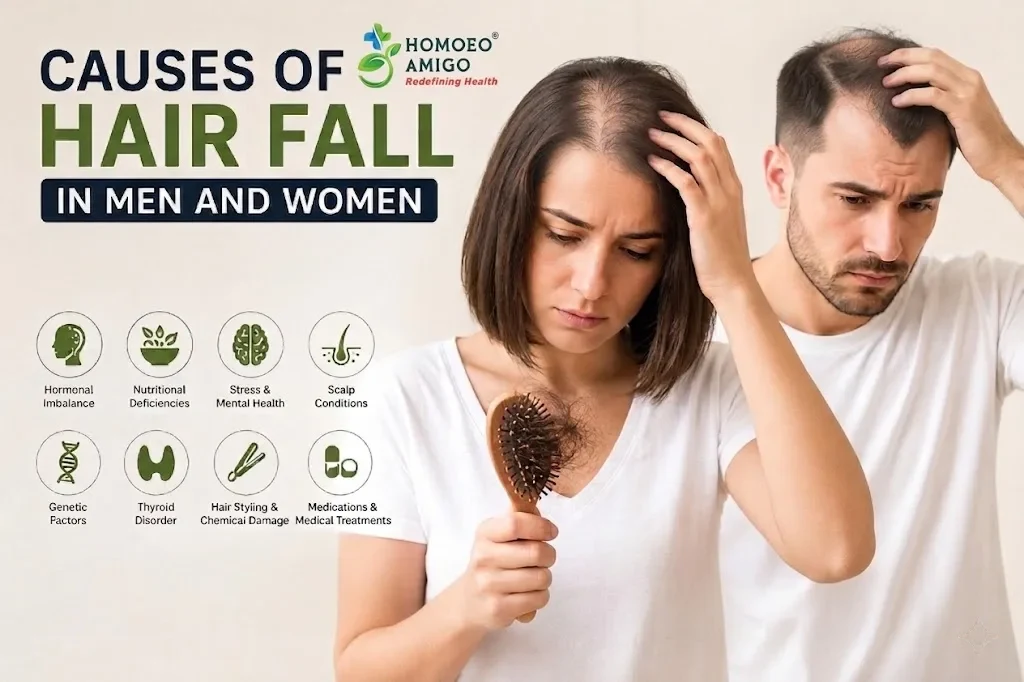
Causes of Hair Fall in Men and Women: Understanding the Real Reasons Behind Hair Loss
Have you ever noticed more hair on your pillow, in the shower drain, or stuck in your comb and wondered if it's normal or if I'm actually losing my hair? Or maybe even after trying everything from shampoos, oils, to DIY remedies, but nothing has worked, and the hair fall just won’t stop. So here’s the uncomfortable truth: hair fall is rarely about the product you’re using, and it is usually your body signalling that something internally is off, it can be your hormones, nutrition, stress, or even your daily habits. The problem is that most people treat hair loss blindly, and they focus on quick fixes instead of understanding the root cause of the issue.
In this article, let’s break down the real causes of hair fall in men and women, so that you can stop guessing and start fixing the problem at the root.
Let’s Stop Guessing and Understand Hair Fall:
Hair fall is normal if you are shedding 50-100 strands per day, but anything beyond that is a sign that there is an underlying cause for the hair fall. Hair grows in cycles: Anagen, which is the growth phase, catagen is the transition phase, and telogen is the resting or shedding phase. Most hair fall issues occur when more hair enters the telogen phase prematurely, which simply means that your body is pushing hair out faster than it should.
Main Causes of Hairfall:
Cause | Core Issue | Key Sign |
|
| |
Nutritional deficiency |
|
|
|
| |
|
| |
Genetics |
|
|
Hormonal Imbalance
The biggest culprit for hair fall is hormonal imbalance, and it is underestimated by most people. In men, DHT or Dihydrotestosterone shrinks the hair follicles, which leads to a receding hairline and crown thinning. Genetic sensitivity also masters more than the hormone level itself. In women, hormonal triggers like PCOS, thyroid issues, pregnancy, postpartum, and menopause are some of the causes of hair loss. Common signs include sudden thinning, hair fall with irregular periods, and acne with hair fall. If your hormones are not balanced, no oil or shampoo can fix it.
Nutritional Deficiencies
Nutritional deficiencies are also one of the most ignored causes. People obsess over products but often ignore what they eat. Some key deficiencies include iron deficiency, which is very common in women and leads to diffuse hair thinning, vitamin D deficiency that weakens hair follicles, vitamin B12 causes hair fall and fatigue, and protein deficiency that affects keratin. Hair fall, fatigue, pale skin, slow hair growth, and brittle nails are signs of nutritional deficiencies in the body, so if your diet is protein-deficient, your hair will give you these signs.
Stress and Mental Health
You might think stress is normal, but your hair does not take it lightly. It is a silent destroyer of your hair and overall health. Stress and mental health can cause conditions like telogen effluvium, which leads to sudden and heavy hair shedding. It is triggered by emotional stress, physical stress, illness or surgery, and sleep deprivation. The hair fall starts 2-3 months after a stress event.
Scalp Conditions
Most people ignore the surface-level problems by ignoring the condition of their scalp. A bad scalp is simply a bad environment for hair growth. An unhealthy and unhygienic scalp can cause issues like dandruff, which causes inflammation and weakens the roots, seborrheic dermatitis causes an oily and flaky scalp, fungal infections, and psoriasis. The signs of an unhealthy scalp are usually itching, flakes, and an oily scalp with hair fall. So if the scalp is unhealthy, eventually the hair growth is also compromised.
Genetic Factors
Genetic factors matter more than you think. In men, male pattern baldness is a predictable pattern and is progressive and in women, female pattern hair loss causes overall thinning but not patchy hair loss. These are the factors caused by genetics that affect both men and women differently.
Thyroid Disorder
The thyroid controls your metabolism and also your hair growth. The types of thyroid include hypothyroidism and hyperthyroidism, and the symptoms include hair fall, changes in weight, fatigue, and dry skin. So hair fall is just a symptom, but the real issue lies deeper.
Hair Styling and Chemical Damage
These are self-inflicting damage as you are damaging your own hair. Excessive heat styling, hair coloring or bleaching, tight hairstyles like ponytails or buns, all these are causes of hair damage, and this condition is called traction alopecia, in which the hair thinning shows at temples, and there is excessive hair breakage but not root loss. So, avoid heat styling and chemical application in your hair for healthy hair.
Medications and Medical Treatments
Several medicines and treatments often disrupt your hair cycle, like antidepressants, blood pressure meds, chemotherapy, and other hormonal pills, and the effect they cause is pushing hair into the shedding phase. In many cases, it is temporary, but it needs proper management, but in other cases, it might affect the hair permanently.
Environmental Factors
This is a cause that is extremely underrated but real. Environmental factors like pollution, hard water, and UV exposure are some causes of hair fall in men and women, and affect your hair as they weaken your hair shaft, causing scalp irritation and breakage. These do not cause baldness but accelerate the damage to the hair.
The Change in Approach Matters
Most people treat hair fall by trying different oils, changing shampoos, panicking, and repeating, but the real approach should be to identify the root cause of the issue, which can be hormonal, nutritional, stress, or genetic. It is important to fix the issue internally and then use supporting products externally to stop hair fall from recurring, because when you treat symptoms without understanding the cause, all the treatments will turn out to be ineffective.
Hairfall is rarely caused by just one factor. Causes of hair fall in men and women vary in many ways, and usually it is a combination of 2-3 underlying issues that cause hair fall. It is a reflection of what’s happening inside your body and how you treat it daily. If your hormones are not balanced, nutrients are lacking, or your lifestyle is poor, then it will reflect on your hair.
Comments (0)
Loading comments...