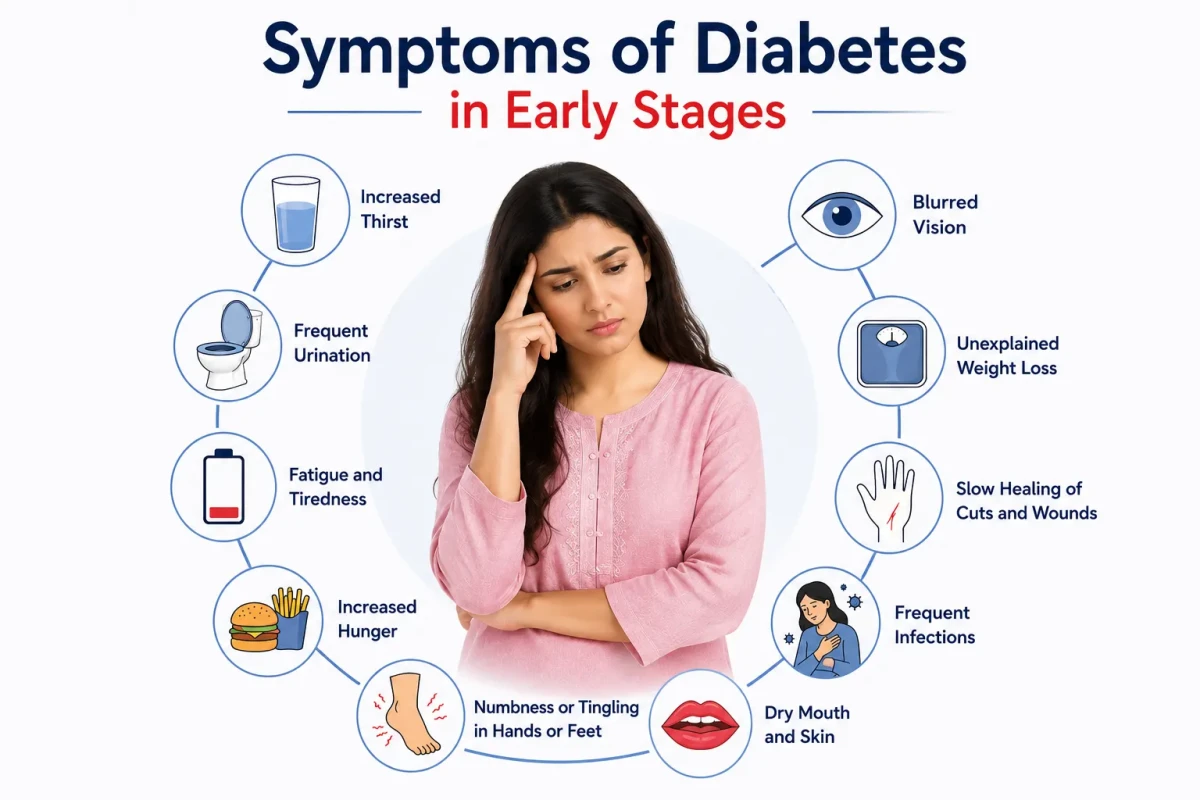
Symptoms of Diabetes in Early Stages: Early Warning Signs
Diabetes is a very common problem that is known throughout the world, and innumerable people are affected by it sooner or later in their lives. Let us know more about the symptoms of diabetes in the early stages so that it can be effectively diagnosed and treated properly.
Diabetes Overview:
We often hear the word diabetes, as it is so common, and the people suffering from it are called diabetics. Diabetes is an acute medical condition in which the blood sugar levels are regulated improperly. The insulin content produced by the body is insufficient, or the utilization of the insulin remains ineffective.
The chief energy unit of the body is glucose, and insulin is basically a hormonal energy that helps glucose get into the cells for effective energy utilization. When the glucose level is high in the bloodstream, the sugar level is automatically elevated.
Types of Diabetes:
Type 1: In this case, there is insufficient or nil insulin buildup in the body.
Type 2: In this case, the system acts as an agent of resistance towards the insulin or faces ineffective usage.
Gestational Diabetes: In this case, there is high blood sugar that is first diagnosed during pregnancy6, this is typically caused by hormonal changes, which increase insulin resistance and affect the body’s ability to process glucose.
Other specific types of diabetes include prediabetes, latent autoimmune diabetes in adults, maturity-onset diabetes of the young, type 3c diabetes, and neonatal diabetes.
Early Symptoms of Diabetes
Certain red flags warn you of diabetes early. So look out for these symptoms to detect the early stages of diabetes.
You experience constant thirst pangs.
Urinating more often, especially at night.
Feeling extremely drained and weary.
Weight loss occurs at an alarming rate. This happens because there is a fat and muscle utilization in the body, and the glucose level cannot be utilized.
The appetite increases, and you tend to eat more than usual and experience severe and prolonged hunger pangs.
Eyesight becomes hazy, and the vision is blurry.
Wounds and injuries take much longer to heal than usual.
Reason for Experiencing Constant thirst Pangs
The medical term for experiencing constant and frequent thirst pangs in diabetes is called polydipsia. It happens because the kidneys flush out the extra glucose content through the urine. It means that the water content of the body lessens to a greater degree, and that leaves you feeling dehydrated, leading to severe thirst. The high blood sugar levels cause the kidneys to eliminate the excess sugar buildup.
Why do you feel tired and Weak?
When the glucose is not used enough, your body shows signs of weakness and weariness. It happens because the insulin becomes resistant. Low blood sugar is called hypoglycemia, it may occur in specific cases.
Reason for abrupt weight loss
Diabetics experience weight loss when the stored muscles and fat are burned because the glucose levels fail to work properly as the muscle buildup in the body becomes active and functional. This is why people experience a sudden loss in weight in case of diabetes. Excess calories are also eliminated from the body through urine output, which becomes another factor for the drop in body weight.
Experiencing Hunger Pangs More than Usual
Polyphagia is the medical term that is used for sudden and unexplained hunger pangs in diabetes. It happens when the excess glucose content in the body cannot be effectively utilized due to insulin resistance, as a result, the cells are not able to be sufficiently energized, and thus people tend to eat more in large proportions.
Poor or Blurred Vision
Hyperglycemia, or the sudden rise in blood sugar levels, is one of the causes for blurred or foggy vision. It means that the eye lens undergoes swelling and shape alterations when the glucose level is high. This blurred vision makes it difficult for people to see clearly, it can be temporary and can be controlled with proper diabetes management. However, if it is left untreated for a long period of time, it can cause retinopathy due to the deterioration of the blood vessels in the retina, which can damage vision permanently.
Healing Takes longer than Usual
It is often seen that people with diabetes face a longer time to heal than usual when bruised or wounded. It happens due to multiple reasons, the high sugar levels deteriorate he blood vessels and nerves. The blood flow is weakened, and the sensations are disrupted. The immunity is weakened, and the usual recovery cycle is disrupted as a result, the inflammation lasts longer than usual, and the tissue repair is slow, causing cuts and bruises to be hard to heal.
Why Should Symptoms be detected in the Early Stage?
The severe complexities can be prevented early, before they get more complex.
The kidneys show signs of deterioration.
The infections can be lessened to a greater degree.
The blood sugar levels can be synchronized.
The heart and blood vessels can be safeguarded.
The loss of vision can be prevented.
Red flags to detect
It is always necessary to watch out for the red flags, such as:
Blood sugar is hereditary, so people with a diabetic history need to be cautious.
Cholesterol or high blood pressure are also prone to diabetes.
People dealing with obesity or lead a sedentary lifestyle then there are higher chance of getting diabetes.
Looking out for gestational histories for women while conceiving or during pregnancy.
Taking Precautionary Measures
Several screening tests should be conducted, such as fasting glucose, blood sugar test, and other related tests.
Opt for a routine check-up annually to ensure everything is in order.
Attend awareness camps to be aware of the risks and management of diabetes.
Lifestyle Changes
It is important to stay hydrated and drink plenty of water throughout the day.
Be physically active and exercise for at least half an hour daily to ensure insulin adaptability.
It is important to maintain a healthy sleeping pattern because a poor sleep cycle can be detrimental to insulin resistance and can cause the blood sugar level to fall.
Stress and tension can make the blood sugar level rise, so it is important to indulge in stress management by practicing yoga, meditation, and deep breathing.
The reality is simple, diabetes does not become dangerous overnight, it becomes dangerous when it is taken casually and left unchecked. Early awareness gives you leverage and allows you to intervene before long-term damage. Prevention and control are not complicated, however, it requires discipline, so regular health checkups, lifestyle changes, controlled diet, and exercise are non-negotiables.
Comments (0)
Loading comments...